When Family Recipes Go to Someone Else: What Do You Do?


She Got the Cookbook. I Got Nothing. But I Found a Solution!
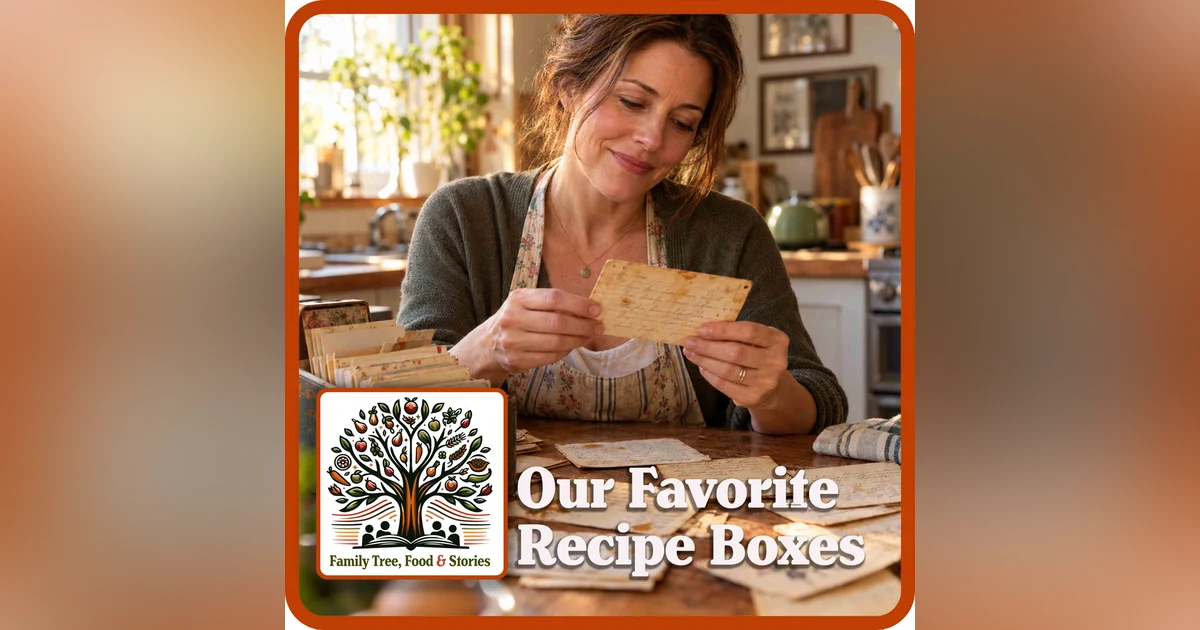
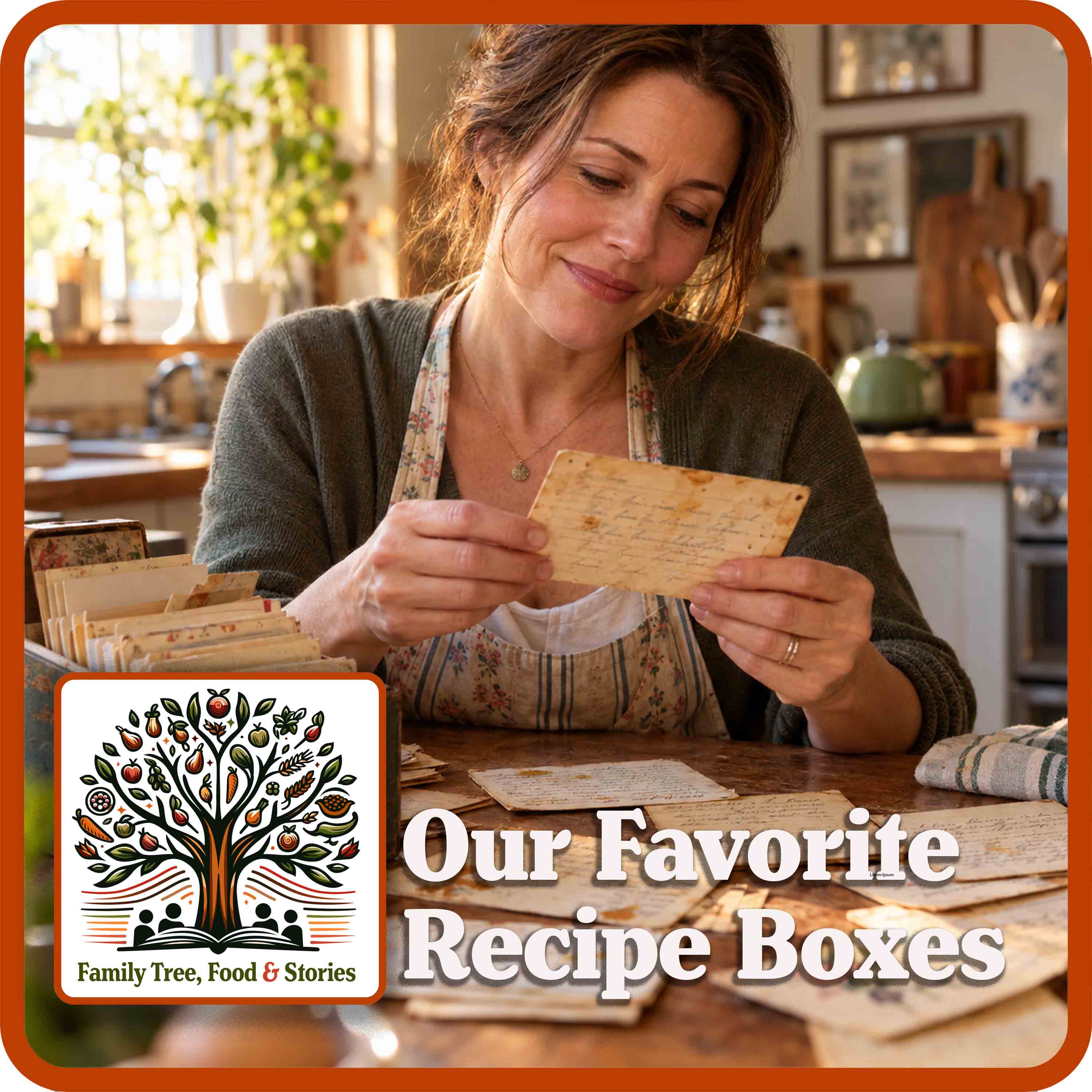
Your sister gets Mom's or Grandma's cookbook, the one you wanted, and your best friend is lucky enough to have her mom's recipe box. The handwriting's faded, the cards are stained, and it says, among other things, "add butter the size of an egg, a tea cup of flour, and bake until done." That's it. No further instruction. What do you do when trying to make her cake just as you remember it? Well, if you have side notes like this or something similar, then you'll likely find the answer you've been looking for in this episode of Family Tree Food Stories with Nancy May and Sylvia France
This episode of Family Tree Food Stories gives you the tools to fix the incomplete notes that grandma, mom, or another family relative left you in her recipe book or box. You'll learn how to translate confusing, old-fashioned measurements into something you can actually use to cook with today. How to track down a "lost" family recipe when nobody wrote it down, and a simple five-step method to make sure your own recipes survive for the next generation.
Then, if the cookbook stuffed with notes, cards, and recipes goes to a sibling, Nancy shares an idea for solving that long-lost desire in her own way. That one isn't a cherished book on her kitchen shelf, and it's even stuffed with a few notes from her mom, as well. It's sort of a stand-in for a family heirloom.
Key Things You'll Learn
- How to figure out vague old recipe instructions that aren't standard to today's cooking methods, so that you can actually cook them, or try to do so, for your own family and friends. We'll take the guesswork out for you. But you have to do the cooking!
- Why writing nothing down is normal. There really is a history lesson there that we all have to be thankful for today.
- Why trying a recipe yourself matters, and why you don't have to get it right. Every recipe always seems to turn out just a little different with each home cook. That's OK, and it's one way to bring an old tradition forward to today's tastes.
- Five ways to preserve any recipe today, no matter how you cook. You can use something as simple as a photo sent via text or email, or write the recipe on a standard 3x5 index card and share it. We also share other ideas for doing this today. Text-thread photo to a formal recipe card: you'll get concrete, low-effort ways to make sure a recipe doesn't die with the person who made it.
- How to find a family recipe nobody wrote down? It's easier than you might think.
What to do next?
If you've got a family recipe with weird instructions that you can't figure out, go to the Family Tree Food Stories Facebook Group page, and we'll help you test and get it right. If you figured out your own recipe mystery, post it there and tell us what you learned and how it tasted once you got it right. You might even help someone else discover their own family recipe challenge.
Subscribe to Family Tree Food Stories, share this episode with your family’s molded-salad defender, and visit podcast.familytreefoodstories.com for more deliciously strange stories hiding in plain sight.
Additional Links Shared:❤️
- Book: My Family Tree, Food & Stories Journal Awarded #1 New Release on Amazon
- Instagram Story updates 📸
- Facebook Family Tree Food Stories GROUP👍
- TikTok: Family Tree Food Stories
- 👇Share Your Story With Nancy & Sylvia!: Leave us a voicemail
- You can send us a DM on Facebook.
Next Thursday: we're jumping into the secrets behind the famous Ball canning jars and why people love them. We learned a ton here too.
About Your Award-Winning Hosts:
Nancy May and Sylvia France are the powerhouse team behind Family Tree, Food & Stories, a member of The Food Stories Media Network, which celebrates the rich traditions and connections everyone has around food, friends, and family meals. Nancy, an award-winning business leader, author, and podcaster, and Sylvia, a visionary author, foodie, and business leader, combine their expertise to bring captivating stories rooted in history, heritage, and food. Together, they weave stories that blend history, tradition, and the love of food, where generations connect and share intriguing mealtime stories and kitchen foibles.
If you missed the first time around... now's your time to listen to Family Tree Food & Stories and get inspired to make better use of what’s already in your kitchen. Then visit our page to share how you're using your leftovers this year. Waste less. Cook smarter. Tell the story behind your fridge.
"Every Meal Has a Story, and Every Story is a Feast." (tm) is a trademark of the Family Tree Food & Stories podcast. (c) Copyright 2026. All US and International Rights Reserved.
@familytreefoodstories #familytreefoodandstories #foodie #foodpodcast #familyrecipe #joyofcooking @joyofcooking #joyofcooking #cookbooks #grandmasRecipes #favoritefood #familymeals #FoodHistory #historypodcast #podcastrecommendations #bettycrocker #bettycrockercookbook #retrofood @thejoyofcooking
So Sylvia, how are you doing today?
Sylvia France:I am absolutely great.
Sylvia France:It's been a good Monday
Nancy May:I'm glad to hear that.
Nancy May:But I have one question for you.
Sylvia France:Uh-oh
Nancy May:Yeah, I know, right?
Nancy May:Do you wish that you had one of those neat little recipe boxes, you know, the kind that are all handwritten
Nancy May:lovingly so with perfect handwriting and script in tidy categories and alphabetically ordered just right?
Sylvia France:That would be in my recipe dreams, but that's not the reality for me or for most of us either.
Sylvia France:wrapped in Saran Wrap
Nancy May:Oh, no.
Sylvia France:I couldn't believe it.
Sylvia France:It was actually my mom's wedding present in 1959, her Betty Crocker Picture Cookbook
Nancy May:So I'm gonna guess since your mom was such a good cook that she didn't make any of those recipes
Sylvia France:I am sure she did not make any of the recipes in the cookbook, or very few that she had
Sylvia France:stuffed in the cookbook, but I do know of one that she actually made
Nancy May:Well, I got a cookbook as a stand-in for one that I really
Nancy May:wanted, but I'll tell you what happens later on in the show about that one
Sylvia France:I can't wait to hear it.
Sylvia France:I'm sure it's a good story
Nancy May:Oh, it is.
Nancy May:So on that note, folks, thank you for being here.
Nancy May:, We're glad that you're listening today.
Nancy May:This is Family Tree Food and Stories.
Nancy May:I'm Nancy May
Sylvia France:And I'm Sylvia France.
Sylvia France:Follow the show.
Sylvia France:Leave a review and tell us where in the world you're listening from, maybe even Omaha, Nebraska
Nancy May:I think we have a few there.
Nancy May:.. And tell us what's sitting on your kitchen counter right now . Because we read
Nancy May:every note on Facebook and on our website, which is Podcast.FamilyTreeFoodStories.com
Nancy May:- Sylvia France: Every episode really comes down to two of the same things.
Nancy May:It's a piece of real history, and a question we're still trying to answer.
Nancy May:I like to think of it as history and mystery of food
Nancy May:I love that part, There's always a little mystery in everything we eat.
Nancy May:Eh, well, maybe not.
Nancy May:Let's hopefully not too much.
Nancy May:But today both of us are talking about recipes, how that actually got into our hands or your hands, and what you
Nancy May:do with each one, , and the ones that still won't give up their stories
Sylvia France:Well, I think it's right now a good time for a proper toast
Nancy May:I agree with you.
Nancy May:I'm ready to drink just about any time.
Nancy May:Oh, no, that doesn't sound too good though.
Nancy May:But
Sylvia France:As long as you're not driving, you're good
Nancy May:No, I'm good.
Nancy May:We're just sitting here at the mic, which might be even more dangerous.
Nancy May:But what's in your glass, Sylvia?
Sylvia France:Well, by looking at what you're holding, those
Sylvia France:look like they could've been your mom's champagne glasses.
Sylvia France:Am I correct?
Nancy May:You are correct.
Nancy May:They were a wedding gift, and that was a gift to me when we got married.
Nancy May:It's not a book, but it does tell their own story
Sylvia France:I think I would rather have the champagne glasses than the, the Saran Wrap cookbook myself
Nancy May:Well, , I think we're ready to toast with a Negroni
Sylvia France:Oh, yes.
Sylvia France:It's one of my favorites, and I know it's yours as well.
Sylvia France:It's equal parts gin, Campari, sweet red vermouth over ice with an orange peel
Nancy May:So where did the Negroni come from?
Sylvia France:Well, legend has it a bartender in Florence just added gin to the count's usual drink in
Sylvia France:1919 and nobody ever wrote down exactly why he made the adjustments
Nancy May:Ooh.
Nancy May:And the ones that we got, however, we got them
Sylvia France:To the recipes that we've got, however we got them,
Nancy May:And not knowing why.
Nancy May:I like that part.
Nancy May:So my mom had this chicken dish that she made, and I always asked for it on my birthday.
Nancy May:She never wrote it down that I know of
Sylvia France:Never.
Sylvia France:It's hard to believe she never wrote it down anywhere
Nancy May:Well, apparently she did.
Nancy May:My sister got it.
Nancy May:But she made it over and over until I could make it just by watching her
Sylvia France:That's actually the oldest way a recipe moves.
Sylvia France:Nobody needed to read or write.
Sylvia France:They just needed to be standing in the room enough times with the person who made it and they loved
Nancy May:That's also why most of them don't survive.
Nancy May:I only wrote it down, at least that one, which I refer to as Mom's Birthday Chicken or Mom's Special Chicken,
Nancy May:because a podcast host where I was a guest asked me for the recipe
Sylvia France:So the only reason it exists on paper is that somebody
Sylvia France:finally asked and your sister didn't fess up that she had it
Nancy May:I know, not at that time.
Nancy May:But that's the only reason that I have a copy of it here, So writing
Nancy May:your own recipe down used to be a luxury though, did you know that?
Sylvia France:I did
Nancy May:And well, for others who don't know it, for most of history, wealthy households did it because
Nancy May:it took somebody who could actually read or write to be able to put a recipe on a card or a piece of paper
Sylvia France:So it sounds like that a recipe or recipe book was actually a status symbol
Nancy May:Sometimes worse than that though.
Nancy May:Remember our friend Amelia Simmons?
Nancy May:Well, she wasn't really our friend 'cause we weren't there.
Sylvia France:I'm not that old.
Sylvia France:Excuse me.
Nancy May:But that was from our Revolutionary War series,
Nancy May:and Amelia was the orphan who wrote the first American cookbook
Sylvia France:I think if I remember correctly, it was like 1796 or something like that.
Nancy May:Yep, it was, and, , that one was called American Cookery.
Nancy May:She couldn't write it herself because she was illiterate, and she got a transcriber to help her.
Nancy May:Then, mystery here, the transcriber , used their own preferences on amounts of things, and kinda sabotaged her own
Nancy May:words or redesigned the recipes , and then that's what actually got sold
Sylvia France:So it sounds like first American cookbook was launched with an actual accusation of foul play
Nancy May:Yeah, no pun- intended, right?
Nancy May:'Cause I'm sure there's a few pieces of fowl that were cooked in there,
Sylvia France:The chickens or turkeys or
Nancy May:something
Nancy May:like that, pheasant.
Nancy May:But still, we don't actually know almost 230 years later whether she was right or wrong
Sylvia France:So history and mystery in 1796
Nancy May:I love that part.
Nancy May:And regular people, how did they write things down?
Sylvia France:Well, they actually had to wait.
Sylvia France:Ordinary literacy, especially for women, didn't really catch on until the last couple of hundred years.
Sylvia France:. Before that, an average woman writing her own recipe in her own hand basically wasn't a thing
Sylvia France:- Nancy May: So even a, few words that somebody else had written themselves was kind of a big deal
Sylvia France:It is, and it's really recent, which I did not know
Nancy May:And then printing, well, I think you know about printing 'cause your family had a print shop, right?
Sylvia France:They did
Nancy May:Well, that suddenly changes everything where everybody's handwritten recipe now becomes black and white and ink
Sylvia France:So they were handing you or selling you what became the recipe box, the actual card in a little tin.
Sylvia France:It got because companies were stapling their own recipe to a coupon and mailing it out
Nancy May:can't imagine that.
Nancy May:That must have been a lot of hard work stapling all those recipes
Sylvia France:I know, where the… It's like I wonder if you know,
Nancy May:And expensive too, right?
Sylvia France:Oh, yeah, especially then
Nancy May:Right?
Nancy May:So the little box that we all picture of grandma having, I
Nancy May:always picture it as this cardboard box with brown things on it.
Nancy May:I don't know why they're brown.
Nancy May:Like, brown fruits and brown whatever.
Nancy May:That's my image of grandma's recipe box
Sylvia France:Oh, I always think of it a little bit brighter with blues and pinks and orange,
Sylvia France:but, maybe it's just a Southern thing.
Sylvia France:So I think it's interesting that the recipe box actually started out as a marketing tool.
Sylvia France:It doesn't make the recipes bad.
Sylvia France:It just means they didn't start out neutral.
Sylvia France:There was a motive behind it
Nancy May:Ugh, there's always a motive behind something in the kitchen, I think
Sylvia France:You know, those marketing departments.
Sylvia France:so what do you actually have then?
Sylvia France:Something written, something shown
Nancy May:Well, for me, my mom left me something written, just barely.
Nancy May:these little books called Make It Now, Bake It Later, and she loved those books.
Nancy May:We'd pick up every new copy of it in the Marion, Massachusetts little gift store whenever we went there.
Nancy May:But she put her notes in the margins, a few words in pencil, mostly whenever she liked it
Sylvia France:Was it a check mark or something different?
Nancy May:Sometimes it was a little more, it was a little less, like who she
Nancy May:made it for, and whether she changed the recipe just a little bit to make it better
Sylvia France:So speaking of your mom's cookbook, remember you teased
Sylvia France:me with the top of the show, the one you said you'd explain later?
Sylvia France:Is it time yet?
Nancy May:Well, I can make a time if you want.
Nancy May:So my mom had this Joy of Cooking cookbook, and we used it all the
Nancy May:time, or I used it all the time to make recipes for cookies.
Nancy May:Oh my God, one day I made cookies with too much salt because I read the recipe wrong.
Nancy May:Yeah.
Nancy May:Hmm.
Nancy May:Not very good, yeah.
Nancy May:My dad tried everything that I ever made, and he just took a bite of those.
Nancy May:He said, "Pretty good, sweetie, but a little salty." So
Sylvia France:He was very nice about it.
Sylvia France:He didn't say yuck
Nancy May:No, no he didn't, including the bread that he cracked a knife in, but that's for another story.
Nancy May:So, but my sister got The Joy of Cooking cookbook and her three-by-five index cards.
Nancy May:Not too many of them, but she had a few.
Nancy May:I think she got those because my sister and her husband were married, I think probably about six years before we were.
Nancy May:But I also think that I got the other cookbooks because my mom
Nancy May:was probably tired of cooking for everybody at that time too
Sylvia France:So tell me what you got.
Nancy May:Well, nothing honestly, so kind of pissed me off that my
Nancy May:sister got that cookbook, but I went looking for a substitute.
Nancy May:And I went looking for, just happened by accident, somebody else's thinking, well, if somebody else's
Nancy May:mom loved it, I'm gonna make them a substitute mom at least in my cookbook
Sylvia France:I really love that.
Sylvia France:I've always asked for substitute moms along the way, especially
Sylvia France:in regards to cooking, 'cause we all know why with my mom.
Sylvia France:So did you find it
Nancy May:I did.
Nancy May:I found one at the church fair in Western Connecticut at the Immanuel Episcopal Church.
Nancy May:We always pick something up there.
Nancy May:It was a stranger's Joy of Cooking cookbook, her handwritten
Nancy May:notes in it, along with a few little stuffed secrets as well.
Nancy May:I
Nancy May:have no idea who she was, though, but I still love that cookbook
Sylvia France:well, I guess it's keeping her memory alive.
Sylvia France:Even though you didn't know her, you still have the treasures of her favorite recipes and her
Sylvia France:notes
Nancy May:I wish I had her name in it though, , but mine is also now a time capsule of my own stuff.
Nancy May:I stuff it with clippings and notes and, yeah, a few things of my mom's as well, including Grandma's rhubarb wine.
Nancy May:and that apple pie recipe, which is always my go-to
Sylvia France:Did you know that there are nine editions of Joy of
Sylvia France:Cooking now, and it's still put out by Irma Rombauer's own family?
Sylvia France:That's four generations
Nancy May:I did.
Nancy May:But meanwhile, your book's author, Betty Crocker, wasn't even a real person.
Nancy May:Ha ha.
Sylvia France:I know, rub it in
Nancy May:Betty Crocker was invented by a committee in 1921
Nancy May:- Sylvia France: So one cookbook runs on an actual bloodline, and mine's been fictional since day one.
Nancy May:Oh, that marketing department again.
Nancy May:You know, I wonder how many cookbooks are still written by families like The Joy of Cooking.
Nancy May:We'll have to look into that one
Sylvia France:Oh, I would love to.
Sylvia France:So let's go back to my mom's cookbook.
Sylvia France:Mine is less orderly than either one of yours, honestly.
Sylvia France:My mom's cookbook is a real junk drawer.
Sylvia France:Clippings, box panels, recipes she thought she ought to have, whatever anybody handed her at a party
Nancy May:No, that doesn't sound like your mom
Sylvia France:Oh, not at all.
Sylvia France:Miss OCD, that everything has to be in its place and it doesn't move for at least 20 years.
Sylvia France:So that's what I thought was hysterical about this book.
Sylvia France:And also, I found this salmon casserole recipe in there, and even funnier, she doesn't like salmon at all.
Sylvia France:I also found these recipes dated back to 1974 that were also in things like a popcorn popper and a,
Sylvia France:dish that you could make a cake in a Crockpot
Nancy May:Oh.
Nancy May:So you know what?
Nancy May:1974, that's retro nowadays.
Nancy May:It's all back.
Nancy May:You might have to bring those out.
Nancy May:But did she actually love any of them?
Sylvia France:Oh, she loved her pecan pie.
Sylvia France:We lived in an old pecan grove, and as slave labor, my - brother and I had to go pick pecans on a nightly
Sylvia France:basis when they came in so the only recipe that was revered was the pecan pie and then my grandma's syrup cake
Nancy May:Oh, that pecan pie actually sounds like torture as far as memories go but did you like it?
Sylvia France:Absolutely not.
Nancy May:Okay.
Nancy May:I can see why
Sylvia France:Well, I'm not a big sweet person, so it was like
Sylvia France:just karo syrup and brown sugar on top of stuff, and it's just,
Nancy May:Not my thing either, but I get it
Sylvia France:So, that's the same way with the syrup cake.
Sylvia France:So my mom said everybody loved it, so I put it out on Facebook, and
Sylvia France:the only person that came up who actually had it was my first cousin
Nancy May:Hmm.
Nancy May:So now what?
Sylvia France:Well, it was interesting.
Sylvia France:His retort back was, "Well, did you know where she kept it?" And I was like, "Well, I was thinking a special dish.
Sylvia France:I was, you know,
Sylvia France:had a, you know, a box, up on the counter." No, it's in her curio that
Sylvia France:had all of her favorite treasures, so it must have been very special to her.
Sylvia France:And I informed my cousin that I actually have the curio in my dining room, and he's like, "What?"
Sylvia France:So he didn't even know I had it, which was funny.
Nancy May:Well, I hope that didn't start, any family wars
Sylvia France:No, he knows it's in good hands, and I love it
Sylvia France:… Nancy May: So at least we know that somebody loved it, and we just don't know whether she actually made it or not
Sylvia France:Well, we did.
Sylvia France:We finally got to the bottom of that but the real mystery here is how did she make it?
Sylvia France:Because her recipe was extremely very vague
Nancy May:Well, we're gonna hold that thought for a second because I wanna go back to the recipe box.
Nancy May:Because we got a story from one of our listeners, Michelle Raginsberger, who
Nancy May:has a recipe box stuffed with her mom's cards, and her dad built the box itself
Sylvia France:Oh, that's so sweet.
Sylvia France:You have the cards and something that was built by her father
Nancy May:I know by hand.
Nancy May:It's a plain silver box, nothing fancy, but the size is built exactly for her mom's cards, so they fit perfectly
Sylvia France:That must be the most written for somebody specific object we've talked about this whole show.
Sylvia France:He Wasn't just storing her recipes.
Sylvia France:He was just making sure they would be safe forever
Sylvia France:. Nancy May: And you know what?
Sylvia France:We've got a picture of that in our Facebook group.
Sylvia France:I'm sure Michelle would be happy to share it with others
Sylvia France:Speaking of outlasting somebody, after the break we're gonna take a swing at my grandma's instructions and
Sylvia France:a few more to see if anybody can actually get what this cake is supposed to be
Nancy May:I'm looking forward to that one
Nancy May:.. So we're back, So if any of this has you looking at what you've got sitting in your drawer somewhere, or you know where you
Nancy May:got it from, start by asking, where did the person who gave it to you get it from?
Sylvia France:Not just what the recipe is.
Sylvia France:Ask why they made it, who taught them, what it was actually for.
Sylvia France:Was it for a celebration or it was just every day?
Nancy May:And, you know, getting that information doesn't need to be fancy or formal or even written down.
Nancy May:You can give them a call, - get it in a text message, or just take a picture of it and send it on down the line to them
Sylvia France:so do you have an example of that?
Nancy May:Well, kinda sorta.
Nancy May:I actually have proof that I did make a particular recipe.
Nancy May:It was my mom's nut ring or nut loaf, and I was a Girl Scout.
Nancy May:, I have the recipe card that was taped on the bottom of the plate because
Nancy May:the judges need to have the recipe when we were doing the bake-off.
Nancy May:And I've got a photo of me as a Girl Scout just to prove that I actually did this
Sylvia France:I saw the pictures and you're too cute for words.
Nancy May:yeah, don't go there.
Sylvia France:it sounds like the plate came with its own footnote
Nancy May:Well, I'm not sure I would call it that, but just a recipe card that I wrote out by hand in my cat scratch.
Nancy May:And some people took it a little bit further there because there's real documented practice of putting recipes on
Nancy May:headstones, which is a little different than a Girl Scout cook-off plate.
Nancy May:I don't know how we got from Girl Scouts to headstones, but that's pretty gruesome still.
Sylvia France:Headstone sounds like it's a little bit more permanent than a three-by-five card
Nancy May:But there's apparently a woman in Brooklyn, well, maybe she was a Girl Scout too at some point,
Nancy May:in Green-Wood Cemetery that actually has her spritz cookie recipe carved into her headstone, ingredients and
Nancy May:the details of that recipe right down to the T, or maybe down to the head.
Sylvia France:Well, that sounds like a very expensive headstone to me, but I'm sure that it's worth it.
Sylvia France:And you know what?
Sylvia France:I think it's kind of interesting that I actually, this Southern girl
Sylvia France:from Florida, have relatives who are planted in the Greenwood Cemetery
Nancy May:You do, so do I. Talk about small world or maybe small cemetery
Sylvia France:Well, actually, maybe not as small as it sounds.
Sylvia France:Greenwood used to be one of the biggest tourist attractions in the country over
Sylvia France:a half a million visitors a year at its peak, second only to Niagara Falls.
Nancy May:Wait, Niagara Falls?
Nancy May:Are you kidding me?
Nancy May:So people wanted to go to a cemetery on vacation almost as much as, I guess, the honeymoon spot of the country
Sylvia France:Well, you know those Victorian cemeteries, they like to have a lunch with their ancestors.
Nancy May:I'm glad I live in today and not then.
Sylvia France:so it was on purpose.
Sylvia France:It's even why Central Park exists.
Sylvia France:Cities saw how much people loved walking around places like Greenwood, so they built parks to match
Nancy May:So two families, yours from down here and mine from up north, opposite ends of at least the Eastern
Nancy May:Seaboard, and we both end up, well, I'll just say it, in the same ditch.
Sylvia France:They were planted next to each other.
Sylvia France:. For 100 years, that's where ambitious families wanted to end up
Nancy May:Which means everybody's got an actual assignment next time that you happen to be in Brooklyn
Sylvia France:I want to go find the cookie lady
Nancy May:Yeah, go find the cookie lady.
Nancy May:I'm gonna presume she wasn't a Girl Scout
Sylvia France:No, probably not, but I wanna try her recipe for sure
Sylvia France:, Nancy May: I don't know.
Sylvia France:Spritz cookies are pretty simple, but still, maybe she's got a different hook
Sylvia France:Okay, I guess I was thinking Aperol Spritz, the cousin
Sylvia France:to the Negroni.
Nancy May:I got it.
Nancy May:But since we're on the subject of things a recipe doesn't tell you, or maybe what the
Nancy May:ghosts are keeping from us, we can talk about how much old recipes just leave out.
Nancy May:How about that?
Sylvia France:My favorite is butter the size of an egg
Nancy May:So that's a real one.
Nancy May:Really threw me for a loop, and it actually works out to be about a quarter
Nancy May:of a cup, which is usually doing a lot of work in that sense for sure
Sylvia France:I like a teacup of flour
Nancy May:That one's even worse.
Nancy May:A teacup never has actually been standardized, depending upon who's in
Nancy May:the kitchen and where you are and where you're standing or who's talking about it.
Nancy May:A teacup is usually about a half a cup to a full cup, and if you're me, it's a cup or a mug of coffee, not a teacup.
Sylvia France:It's more s- like a 10-ounce cup
Nancy May:Yeah, 12 to 14 for sure at my house.
Sylvia France:So two people making the same recipe could have ended up with two completely different cakes
Nancy May:Pretty much.
Nancy May:And then there's yours.
Nancy May:Your Grandma Knight syrup cake, which says, I believe, "Reduce the
Nancy May:heat after almost done," which is, how do you figure that one out?
Sylvia France:I had no clue.
Sylvia France:Do you?
Nancy May:No, I had no idea.
Nancy May:But a woman named Maria Parola was running a cooking school in
Nancy May:Boston in 1877, and then she ran another school in New York in 1882.
Nancy May:That's sort of predating Julia Childs and Jacques Pépin.
Nancy May:But since we're talking about the ladies here, we'll leave it with Julia.
Nancy May:And she was teaching cooking as an actual subject, kind of like home ec class when I was in school.
Sylvia France:I understand she was actually teaching it to immigrants, which I think is cool
Nancy May:Oh, I didn't know that.
Nancy May:I think they probably cooked better than the rest of us did.
Nancy May:But, there was a right way and a wrong way to measure things, and she did that almost 20 years before Fannie
Nancy May:Farmer's Cookbook made a level cup and a level spoon as part of their household phrases and recipes at least
Sylvia France:I did hear of Fannie Farmer, but not until recently Maria Parola
Nancy May:I hadn't either until we were doing this episode.
Nancy May:But Farmer's the one who gets all the credit, sadly, and Parola's the one who's
Nancy May:already been standing in the kitchen doing it and showing everybody else how to do it
Sylvia France:Well, you know, that tracks with everything else we've been talking about today.
Sylvia France:Honestly, the person who actually did the thing isn't the name that always survives.
Sylvia France:They get forgotten
Nancy May:No.
Nancy May:Pharma got the name recognition though, . Then there's an actual Fannie Farmer recipe cabinet.
Nancy May:Did you know that?
Sylvia France:It sounds like a recipe box to me
Nancy May:Kind of.
Nancy May:It's a little wooden box from 1913.
Nancy May:It was sold pre-filled with all sorts of recipe cards
Sylvia France:So that was an actual thing
Nancy May:Yeah, it was an actual thing.
Nancy May:A company called and Klein- Scully and Kleincheckt made them, - and
Nancy May:there's even a magazine ad that we found from 1925 advertising it
Sylvia France:So her name got licensed into the exact kind of box we're talking about all this episode
Nancy May:Sometimes the names get written down, sometimes they don't.
Nancy May:So what do we actually do with that syrup cape that you've got there, Sylvia?
Sylvia France:Well, I took a swing.
Sylvia France:I promised.
Sylvia France:It says bake at 400, then reduce after almost done to 350
Nancy May:That's not a time, that's kind of a look-see
Sylvia France:That was kind of my guess too.
Sylvia France:. Bake it till hot to get the rise going, then back it off once the top
Sylvia France:is set but the middle is probably still soft so it finishes without burning.
Sylvia France:So I put a toothpick in the middle of it to see if it was still wet when I pulled it out
Nancy May:Kind of sounds like two-stage authentication a la internet although in the kitchen
Sylvia France:Kind of like CAPTCHA.
Sylvia France:Are you a human being?
Sylvia France:A two-stage bake is what I've heard.
Sylvia France:It's a real technique still used for dense cakes today.
Sylvia France:We just can't prove that's actually what she meant since neither of us watched her do it.
Sylvia France:We're not that old yet
Nancy May:Yeah, not yet.
Nancy May:But Have you actually tried making it yourself,
Sylvia France:I did.
Sylvia France:I just mentioned that, it was one of those things on a whim.
Sylvia France:I was going to a meeting of people who were Florida pioneer families, and I brought the syrup cake
Nancy May:Hmm.
Nancy May:So how did it taste?
Sylvia France:It actually was too sweet for me, '. But my cousin, my first cousin actually ate it
Sylvia France:, he was a prince, and to , put it into context, he did serve our country in
Sylvia France:the Army, and so when he would come home on leave, she would make it for him
Nancy May:Aw.
Nancy May:I like that.
Nancy May:I'll have to tell you about the cake that my grandma sent to my dad in a Tupper- well, it wasn't a Tupperware, some
Nancy May:sort of contraption - in the war that actually made it to him somewhere across overseas, but that's for another story.
Sylvia France:Oh, I can't wait to hear it.
Nancy May:so before we go, there are five things out of today that you can use
Sylvia France:One, cherish what you've got by actually asking about it.
Sylvia France:Every splash and grease spot has a story.
Sylvia France:A recipe with no story attached is just instructions
Nancy May:And my favorites are the ones that are written out by hand, and ones with the little grease spots on it too
Sylvia France:Two, preserve it however you can actually keep up with it, a
Sylvia France:journal, a phone note, a text thread, or even a picture you post on Facebook
Nancy May:Do you actually do any of those?
Sylvia France:I do.
Sylvia France:I have so many people requesting the recipes that I did get that
Sylvia France:I have put them on Facebook 'cause that's the easiest for me
Nancy May:Yep, that's a good way to do it.
Nancy May:So anybody who's in our Facebook group, you can get those too, right, Sylvia?
Sylvia France:including grandma and I's syrup cake recipe.
Nancy May:I like that.
Nancy May:three, don't let missing instructions scare you off.
Nancy May:. Butter the size of an egg is annoying, but it's not impossible, and yes, there are different size eggs.
Nancy May:But you can figure it out
Sylvia France:so call it a quarter of a cup, adjust from there, and let Google be your friend
Nancy May:Four.
Nancy May:So go ahead and make it on your own.
Nancy May:I've had plenty of flops, but they still somehow taste good
Sylvia France:So tell me about some of your flops
Nancy May:Well, my mom's Yorkshire pudding never made it.
Nancy May:It always turned into a mess, but my popovers were famous up north until we got down south.
Nancy May:Turns out that humidity and altitude does make difference with a recipe.
Nancy May:I'm still working on that one
Sylvia France:All right, I volunteer to be a guinea pig.
Sylvia France:And five, document what you make now for whoever comes after you,
Sylvia France:and ask your mom, your sister, your aunt, your father while you're at it.
Sylvia France:Some people care enough to put a recipe in a will or, as we mentioned, even a headstone
Nancy May:And sometimes your neighbors are really good guinea pigs.
Nancy May:So to the ones that we have the recipes , and to however we got them
Sylvia France:To the recipes we love, cherish, and sometimes don't understand
Nancy May:and next time, stay tuned because we're opening a different
Nancy May:drawer, or maybe . we're going into a different shelf in the refrigerator.
Nancy May:This one's about butter and butter stamps and molds, and how you can make one and do it yourself
Sylvia France:So thank you for listening and for digging through our own drawers or cabinets with us.
Sylvia France:Happy cooking and happy experimenting
Nancy May:Now I am ready for that Negroni.
Sylvia France:Oh, you and me both, honey.