The Family Table That Built Strong Bones Using Real Food and Traditions
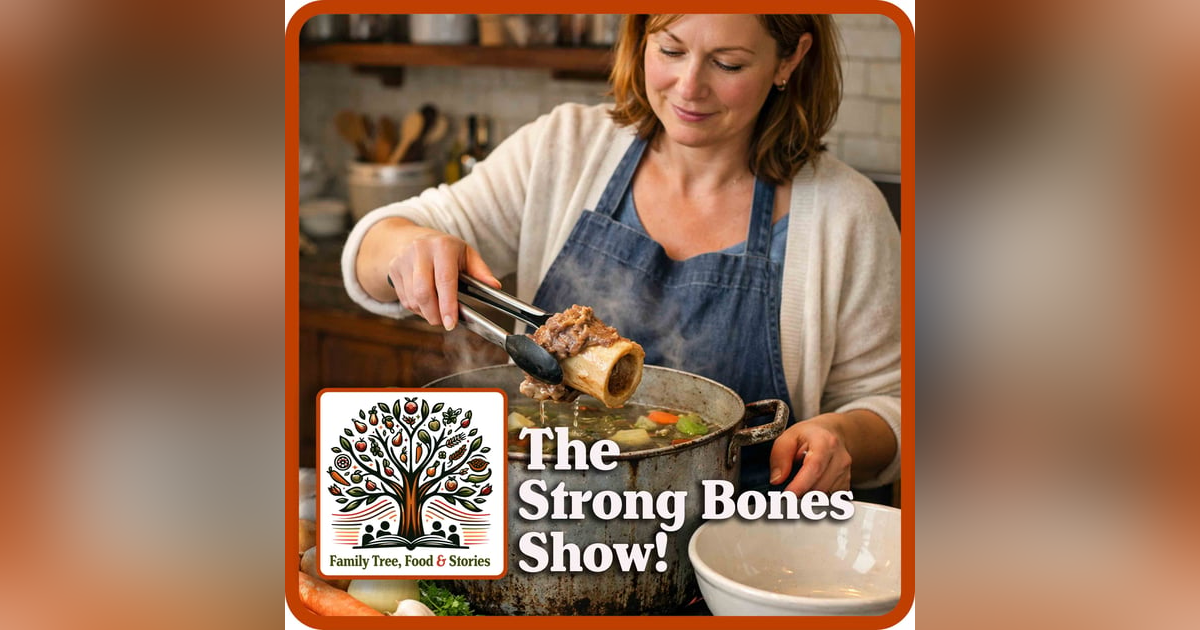


Bone Deep: Your Grandmother and Mom Really Did Know How to Use Their Kitchen Like a Pharmacy.
What does a simple pot of beans simmering on the stove have in common with cutting-edge nutritional science? More than you'd ever expect. In this episode of Family Tree Food & Stories, Nancy May and Sylvia Lovely share how our moms and grandmas instinctively know how to keep our bodies strong enough to handle a heavy workload.
In this episode, Sylvia opens up about her own very personal bone health journey as she’s been undergoing cancer treatment, and a medication she takes suppresses a hormone critical for keeping bones strong. Her very real concern was the launchpad for this episode’s conversation and dive into the foods, traditions, and ancient wisdom that have helped many generations build strong bodies, long before drugstore supplements were available.
Food Wisdom From Our Parents and Ancestors:
Nancy and Sylvia dig into their shared experiences in their own family kitchens. Nancy with her mom in Central Long Island, and Sylvia’s grandmother, who was an Eastern Kentucky mountain girl.
You might be surprised to learn how much we’ve discovered about how best to manage our own bone health over the years through archaeological dig sites, Parisian bistros, Japanese candy counters, and the calcium aisle at your local friendly pharmacist.
Maybe our great-grandmothers really did know the best recipes for building strong bodies 12 ways. Listen in as we connect the Family Tree Food & Stories dots, and dishes between what we used to eat, what we stopped eating, and why we might want to eat what Mom put on our plates after all.
This is a show for foodies, family storytellers, home cooks, and anyone who's ever stood in a pharmacy staring at a wall of calcium supplements and thought, "Wait, does any of this actually work?"
Key learning points:
- Calcium Is Just the Beginning; Your Bones Need More: Most of us grew up hearing "drink your milk." But calcium alone is only one piece of a much larger puzzle.
- The Peasant Bone Diet: The Science of Simple Food: Anthropologists studying ancient skeletons are repeatedly surprised by how strong people were, and why.
- "Pot Liquor" Is Liquid Gold, Don't You Dare Pour It Down the Drain! This is one of the most mind-bending food science moments: nixtamalization
- Bone Broth: The Comeback Kid of the Kitchen: And for a good reason!
Nancy and Sylvia are pretty sure this episode of Family Tree Food & Stories will make you look at your dinner plate differently. That’s a good thing too, because it’s exactly what Family Tree Food & Stories is designed to do.
Here's what to do next:
Subscribe to Family Tree Food & Stories so you never miss an episode. You can find us on Apple Podcasts, Spotify, or listen directly at Podcast.FamilyTreeFoodandStories.com
⭐ Leave us a review: it takes 60 seconds and helps thousands of new listeners find us. (We read every single one, too! Promise)
📣 Share this episode with someone you love, a parent, a daughter, a friend going through a health journey. The food wisdom in this episode could genuinely change how they eat.
📋 Take our listener survey; there's a link in the show notes and at the top of our podcast page at Podcast.FamilyTreeFoodStories.com. Tell us what you want to learn and hear about next. We make a show just FOR you.
📖 Pick up our book, My Family Tree, Food and Stories, on Amazon. Because: Every meal has a story and every story is a feast.
Please remember, at the end of the day, the best thing you can do for the people you love, and even yourself, isn't a pill or a prescription.
It's a plate of food shared with a good story.
Every meal is a story. Every story is a feast.™
Additional Links ❤️
- SURVEY: Please Help Us Learn How To Do More For You
- Book: My Family Tree, Food & Stories Journal Awarded #1 New Release on Amazon
- Instagram Story updates 📸
- Facebook Family Tree Food Stories GROUP👍
- TikTok: Family Tree Food Stories
- 👇Share Your Story With Nancy & Sylvia!: Leave us a voicemail
- You can send us a DM on Facebook.
About Your Award-Winning Hosts: Nancy May and Sylvia Lovely are the powerhouse team behind Family Tree, Food & Stories, a member of The Food Stories Media Network, which celebrates the rich traditions and connections everyone has around food, friends, and family meals. Nancy, an award-winning business leader, author, and podcaster, and Sylvia, a visionary author, lawyer, and former CEO, combine their expertise to bring captivating stories rooted in history, heritage, and food. Together, they weave stories that blend history, tradition, and the love of food, where generations connect and share intriguing mealtime stories and kitchen foibles.
If you missed the first time around... now's your time to listen to Family Tree Food & Stories and get inspired to make better use of what’s already in your kitchen. Then visit our page to share how you're using your leftovers this year. Waste less. Cook smarter. Tell the story behind your fridge.
"Every Meal Has a Story, and Every Story is a Feast." (tm) is a trademark of Family Tree Food & Stories podcast (c) copyright 2026, all US and International Rights Reserved.
@familytreefoodstories, #foodie, #BoneHealth, #bonehealthawarness, #foodAsMedicine, #GutHealth, #boneBroth #familycooking #healthyeating #BreastCancer #HealthyAging #FoodStories #WomensHealth #goodEats
Hey everybody, it's Nancy and Sylvia once again from
Nancy May:Family Tree Food and Stories.
Nancy May:We're gonna have a great show today, but before we start, I have a couple
Nancy May:of things I'd like to go over with you.
Nancy May:Our dear listeners.
Nancy May:First, would you please like and subscribe the show.
Nancy May:All you need to do is go to podcast Family Tree Foods Stories.
Nancy May:Go up to the subscribe, or I think it says review.
Nancy May:I have to look at that.
Nancy May:But anyway, it should say, review the show, and then if you look at that,
Nancy May:drop down menu and you can listen and connect to us on any of your favorite
Nancy May:podcast listening apps, including just listening to it on the web, which is
Nancy May:Podcast, family Tree, food and Stories.
Nancy May:we know that you like the show because you wouldn't be here otherwise,
Nancy May:but if you would also share it with friends and family members.
Nancy May:So they have ways and ideas on how to share stories about the meals that
Nancy May:they love and sit at the table with, with friends and family like you.
Nancy May:In addition, we are also doing a survey at Podcast Family Tree Food Stories.
Nancy May:There'll be a link at the bottom of the show notes on this episode.
Nancy May:and if you would just take a moment and answer some of the questions so that we
Nancy May:can create even more and better shows for you, because we do want every
Nancy May:meal to be a story and every story to be a feast like this one, right?
Nancy May:Sylvia?
Sylvia Lovely:Oh, absolutely.
Sylvia Lovely:you know, this is an exciting thing for me personally because I'm undergoing
Sylvia Lovely:some examination of bone health, because of medication I'm on for my
Sylvia Lovely:breast cancer that the listeners may know about 'cause I've talked about
Sylvia Lovely:it before, which suppresses a hormone that's essential for bone health.
Sylvia Lovely:when I look around and see, it's like if you have a Chevy, you're
Sylvia Lovely:gonna see a Chevy everywhere, right?
Sylvia Lovely:But bone health is just everywhere these days with supplements.
Sylvia Lovely:Foods fortified with calcium and protein, bone density scans,
Sylvia Lovely:medications and whatever, but.
Sylvia Lovely:All you have to do stand in the pharmacy aisle of calcium and
Sylvia Lovely:it's there blaring out the selling points of their particular calcium
Sylvia Lovely:and absorbant.
Sylvia Lovely:It is a great big word and we're gonna get to that here in a bit.
Nancy May:And if you haven't figured out already, that's
Nancy May:what our show is about today.
Nancy May:It's all about bone health, mineral rich foods and ideas and ways to keep well.
Nancy May:More than the radio eves going, but
Sylvia Lovely:Mm-hmm.
Nancy May:our body's going in many different directions, but ideally,
Nancy May:strong and healthy so that we can have more rich experiences with
Nancy May:those that we love and care about.
Nancy May:But I don't know about you, Sylvia, but my mom used to talk about health as
Nancy May:it related to the foods that we ate.
Nancy May:Did yours?
Sylvia Lovely:Well, not really.
Sylvia Lovely:I just think they just sort of did it.
Sylvia Lovely:I mean, that's in my experience anyway, and, I commend your
Sylvia Lovely:mother for talking about that, but my grandmother just sort of.
Sylvia Lovely:Cooked
Nancy May:She just did it right.
Sylvia Lovely:Yeah.
Sylvia Lovely:She just did it more so than my mother.
Sylvia Lovely:My mother really didn't, she wasn't a very good cook, but my grandmother
Sylvia Lovely:was good enough to make up for it.
Sylvia Lovely:and my mother's gone, so I don't, I won't insult her with this.
Nancy May:No.
Sylvia Lovely:But she would just end up with something really remarkable.
Sylvia Lovely:Traditional recipes often contain, as we have discovered about early kitchen life,
Sylvia Lovely:that combinations of food, they just knew this, trial and error that deliver the
Sylvia Lovely:nutrients we now know are very important.
Nancy May:Well, my mom used to talk about, make sure you drink your milk.
Nancy May:It's good for you.
Nancy May:Cheese was good for you bones.
Nancy May:Well, cheese is not necessarily as good for you today as it used
Nancy May:to be because we think of all the cholesterol stuff that's going on.
Nancy May:Alright.
Nancy May:So we don't wanna go down that rabbit hole
Nancy May:right now But milk was extra fortified with calcium, and I'm presuming
Nancy May:that the milk that we had as kids.
Nancy May:My mom used to get the milk and the orange juice delivered by the milkman
Sylvia Lovely:Oh, the
Nancy May:in the glass bottles.
Nancy May:it was like the thing that everybody did back then.
Nancy May:I don't think milk been around anymore that delivered just 'cause
Nancy May:it would go to the grocery store.
Nancy May:You had cream, you had, buttermilk, you could have regular milk and then you could
Nancy May:have orange juice that was delivered, which of course there's lots of orange
Nancy May:trees in Long Island where I grew up.
Sylvia Lovely:Yeah.
Nancy May:then there was other issues of bone health because our
Nancy May:community in Central Long Island was putting, fluoride in the water.
Nancy May:So there was a lot of issues about health and nutrition that seemed
Nancy May:to be central to our community.
Nancy May:As a whole, which I thought was rather interesting looking back At
Nancy May:the time I didn't even think about it as a kid other than like, ah, and
Nancy May:all the advertising that went on.
Nancy May:Um, wonder Bread used to do the Build Strong body's 12 ways.
Nancy May:Yeah.
Nancy May:Well, you can also sweat your pipes with Wonder Bread, but
Nancy May:that's been in other shows.
Sylvia Lovely:You know, there was a huge movement, drink milk movement
Sylvia Lovely:that really, I think almost was a disservice because it made people
Sylvia Lovely:think that was the only thing that they needed to do was to drink fortified
Sylvia Lovely:milk for a lot of different reasons.
Sylvia Lovely:But, you know, that was kind of interesting because it
Sylvia Lovely:isn't the only thing, right?
Sylvia Lovely:so there's a lot that goes into the foods that our grandmothers and
Sylvia Lovely:people before them, the ancients ate.
Sylvia Lovely:And so she, you should get right to the mineral story.
Sylvia Lovely:Let's talk about that.
Nancy May:Let's do that, please.
Sylvia Lovely:Uh, today calcium does tend to dominate the conversation
Sylvia Lovely:about bones, and it's like the king of the pharmacy, but what?
Nancy May:Well, calcium just doesn't act alone.
Nancy May:It's kind of like the, um, think of it as the bricks of a building, you
Nancy May:still need the mortar, but the structure holds those bricks together in place.
Nancy May:Vitamin D brings the body together to actually help the body absorb
Nancy May:calcium, think fatty fish and eggs.
Nancy May:So it's not just milk, like you said, magnesium helps the body use calcium
Nancy May:property prop property properly.
Nancy May:Like that needs to be a blooper in the show.
Nancy May:Think pumpkin seeds and almonds and spinach and delicious black beans.
Nancy May:I don't know about you, but I love a really good spicy black bean soup.
Nancy May:And then you have vitamin K and K2 collard greens.
Nancy May:That's your neck of the woods, turnip creams, kale, spinach.
Nancy May:Again, spinach.
Nancy May:Spinach seems to be coming back and I would think that calcium
Nancy May:would be like the white stuff, but that's not necessarily true.
Sylvia Lovely:No, greens are really important.
Nancy May:Right, and lettuce, and then also K2, which we don't hear too much
Nancy May:about, but these are fermented foods and soft, stinky cheeses and butters.
Nancy May:I could die for that.
Nancy May:That is my favorite.
Nancy May:Just give me a good, nice.
Nancy May:Chunk of sourdough bread and soft stinky cheese and I, I could
Nancy May:actually have a cheese and butter sandwich and I'd be very happy.
Sylvia Lovely:Sounds good to me.
Sylvia Lovely:Sounds good to me.
Sylvia Lovely:You know, you were talking about the milkman and the orange juice.
Sylvia Lovely:Sun and all our, whatever, whoever brought 'em, but it made me think my grandmother
Sylvia Lovely:lived in rural eastern Kentucky, we're mountainous mountains all around,
Sylvia Lovely:and the great anticipated day was when the government cheese got delivered,
Nancy May:Oh, interesting.
Sylvia Lovely:she'd
Nancy May:they deliver with milk too?
Sylvia Lovely:Yeah, I remember the cheese.
Sylvia Lovely:I remember everybody was so excited about the big chunk of
Sylvia Lovely:cheese and it would get delivered.
Sylvia Lovely:I have no idea who delivered it.
Sylvia Lovely:But that was a delivery that was made back in the day and I don't think
Sylvia Lovely:anymore, but, anyway, you know.
Sylvia Lovely:But here's an interesting story.
Sylvia Lovely:Now, when I was a little girl, did I aspire to be a fireman?
Sylvia Lovely:No.
Sylvia Lovely:Did I aspire to be a policeman?
Sylvia Lovely:No.
Sylvia Lovely:I wanted to be an anthropologist.
Nancy May:I think that's cool.
Sylvia Lovely:I wanted to dig in the dirt and find bones.
Sylvia Lovely:I mean, I thought that sounded really interesting.
Sylvia Lovely:Well, fast forwarding, here we go.
Sylvia Lovely:anthropologists, the real ones, studying ancient skeletons sometimes
Sylvia Lovely:note something really surprising.
Sylvia Lovely:Those bones are awfully strong.
Sylvia Lovely:I've been able to figure that out and they think the
Sylvia Lovely:explanation is fairly simple.
Sylvia Lovely:Three things to remember.
Sylvia Lovely:Mineral rich foods, and we'll talk about that.
Sylvia Lovely:Lots of moving around.
Sylvia Lovely:And plenty of sunshine.
Sylvia Lovely:There you go.
Sylvia Lovely:You're in the, you're in the healthy spot.
Nancy May:Vitamin D3.
Nancy May:We need that right.
Sylvia Lovely:And interestingly, this wasn't limited to wealthy households.
Sylvia Lovely:You would've thought that maybe, but actually it was the peasants, it
Sylvia Lovely:was the workers, some of the most nourishing food traditions developed
Sylvia Lovely:in rural and, poor communities.
Sylvia Lovely:'cause they had to make the most of everything they had and they learned
Sylvia Lovely:a lot like the indigenous people and, and all of that kind of stuff as well.
Nancy May:You know, anthropologists are very interesting people and at one point
Nancy May:in my life I thought I could do that too.
Nancy May:Except I have to, I have to confess something.
Nancy May:As a kid, when you take the museum tours, you go to the big fancy museums,
Nancy May:we would always have to go through.
Nancy May:In the Met in New York, the um, the Egyptian section, which had
Nancy May:the mummies and the skeletons.
Nancy May:I could not walk through there with my eyes open.
Sylvia Lovely:Really you.
Nancy May:I was always afraid of seeing the bones today.
Nancy May:Not a problem, but I think it took me probably till I was in my thirties
Nancy May:before I could open my eyes going through looking at mummies and dead bones.
Sylvia Lovely:Well, next, next, uh, what do they call those?
Sylvia Lovely:Next field trip I take to dig up bones.
Sylvia Lovely:I'm not taking you
Nancy May:Okay.
Sylvia Lovely:When I think about
Sylvia Lovely:bone health, I do often think of my grandmother's kitchen.
Sylvia Lovely:She didn't talk about nutrients.
Sylvia Lovely:There were no charts on the wall, explain calcium and magnesium.
Sylvia Lovely:But every meal she made somehow seemed to contain the very foods
Sylvia Lovely:that nutrition experts recommend.
Sylvia Lovely:And I think, , a lot of times, like I said, it.
Sylvia Lovely:It evolves through families that didn't have a lot.
Sylvia Lovely:They had, they picked up greens out of the front yard, that kind of thing.
Sylvia Lovely:This is an Eastern Kentucky Appalachia heart of it.
Sylvia Lovely:beans cooked with a ham bone and cornbread and cast iron skillet
Sylvia Lovely:and buttermilk on the table.
Nancy May:When you get iron from your cast iron
Sylvia Lovely:Well, there you go.
Sylvia Lovely:Sometimes there were fish and they were delicate little filets.
Sylvia Lovely:They were the whole thing, all its insides and the bones.
Sylvia Lovely:Now, if somebody tells me that I won't eat fish that has
Sylvia Lovely:all that in it, I just won't.
Sylvia Lovely:I'm, I'm sorry, I'm not, I'm not a back to nature person
Nancy May:ever had canned mackerel?
Sylvia Lovely:No, but I've had canned salmon and it contains some bones.
Nancy May:the can mackerel.
Nancy May:As a kid, I used to love that stuff and now it, to me it's cat
Nancy May:food, but that's besides the point.
Nancy May:It's funny how your tastes change when you get older, but the can
Nancy May:mackerel, if you opened it always had like the, the backbone of the
Nancy May:fish in there and it just crumbled.
Nancy May:And now I couldn't eat, watch the bones in the museum or look at them,
Nancy May:but I could certainly crunch the bones and the fish for some reason.
Nancy May:We had two other friends and, and I went to Paris for a big birthday.
Nancy May:The girls and one of my friends just was, didn't get outta the country really
Nancy May:that much or really out of New York much.
Nancy May:she ordered fish at this lovely little sort of bistro in Paris that
Nancy May:we had gone to one night and they brought the fish, the whole fish
Nancy May:and the head and everything, and.
Nancy May:my other friend Diane, and and I were happily eating our snails and everything
Nancy May:else, and the fish comes and she screams, and the entire restaurant
Nancy May:looked at her and started to laugh.
Nancy May:Meanwhile, the waiter ran over really fast and said, Madam,
Nancy May:would you like me to remove that?
Sylvia Lovely:Oh yes, please.
Nancy May:please.
Nancy May:So we gotta chuckle out of that one.
Sylvia Lovely:It reminds me of my Escargo story when I was doing a job
Sylvia Lovely:interview for my first law job the, uh, test of the evening was serving Escargo.
Sylvia Lovely:That's snails, right?
Sylvia Lovely:And not telling me that that's what it was.
Sylvia Lovely:Oh, they had a great laugh.
Sylvia Lovely:They had a great laugh over
Nancy May:Do you like them today?
Sylvia Lovely:Uh, no, not really.
Sylvia Lovely:Not really.
Sylvia Lovely:And you don't see 'em much anymore either, so Anyway,
Sylvia Lovely:but, but anyway, you know what, what my grandmother did wasn't really a diet.
Sylvia Lovely:it was just supper, but there's one food that really counts.
Sylvia Lovely:And I have a question for you.
Sylvia Lovely:What is the one food you could mention at a dinner party that might help really,
Sylvia Lovely:really help build strong bones, but you get some pretty skeptical looks.
Sylvia Lovely:What is it?
Nancy May:Oh, I think you're gonna say, well.
Nancy May:It's gonna be either a salad topping and tint or a pizza topping.
Nancy May:And that's sardines.
Sylvia Lovely:Sardines.
Nancy May:My dogs love sardines.
Nancy May:Oh
Nancy May:my
Nancy May:gosh.
Nancy May:The juice.
Nancy May:Yeah.
Sylvia Lovely:Who likes 'em?
Nancy May:My dogs
Sylvia Lovely:Oh,
Sylvia Lovely:oh.
Nancy May:Bob likes 'em too.
Nancy May:He will eat a sardine, like,
Sylvia Lovely:Well, good for him.
Nancy May:He is worse than the cats.
Nancy May:Well, we don't have cats, but all the extra juice and the oil that
Nancy May:come outta sardines, we put it on top of the dog food, and the dogs are
Nancy May:just happy as climbs are high tide.
Sylvia Lovely:That is amazing.
Sylvia Lovely:'cause that's really good for them,
Nancy May:It's good for them.
Nancy May:It's good for him too.
Sylvia Lovely:Yeah.
Sylvia Lovely:Yeah.
Sylvia Lovely:And you eat the little boogers, you just eat the whole thing.
Sylvia Lovely:All their little bones and all their little I'm not sure.
Sylvia Lovely:Uh, no, no, no, no.
Sylvia Lovely:but it's, eating an entire fish was what people used to do, including the bones.
Sylvia Lovely:And because they're packed with calcium and minerals and all those
Sylvia Lovely:little good things that make it work.
Sylvia Lovely:And because the bones are so small, cooking softens them
Sylvia Lovely:enough that they're easy to eat.
Nancy May:But kind of crunchy.
Nancy May:Yeah,
Nancy May:I like that.
Nancy May:But you see versions everywhere.
Nancy May:And actually the Mediterranean fishermen grilling sardines, the fresh
Nancy May:ones are supposed to be fabulous.
Nancy May:I've never had a fresh sardine, but they're delicacy and now my, I, my
Nancy May:aunt and uncle with their kids, spent a couple of years in Kyoto, Japan.
Nancy May:'cause my uncle worked in, in marketing overseas.
Nancy May:And my cousins came back with dried little tiny fishes, which were
Nancy May:considered Japanese candies for the kids.
Sylvia Lovely:Wow.
Nancy May:I grew up in the United States and not in Japan.
Sylvia Lovely:Ooh.
Nancy May:take bubble gum over sardines any day.
Sylvia Lovely:yeah.
Sylvia Lovely:You know, the Japanese are sort of, they
Sylvia Lovely:like,
Nancy May:kind of weird.
Sylvia Lovely:you know, they're kind.
Sylvia Lovely:Yeah, I was trying, I was groping,
Nancy May:But I do like sushi, so
Sylvia Lovely:but, but you, here's the reason.
Sylvia Lovely:fish began in our world.
Sylvia Lovely:One of the things that went away, were eating small fish.
Sylvia Lovely:now we just throw 'em back in, right?
Sylvia Lovely:But fish began arriving on our plates as neat little boneless
Sylvia Lovely:filets or chicken fingers.
Sylvia Lovely:So, I guess that's not fish, but it's nothing, like it resembles
Sylvia Lovely:the original thing, just like small fish, which is kind of.
Sylvia Lovely:Interesting and too bad in many ways.
Sylvia Lovely:'cause people get used to eating things too, and they've developed this thing
Sylvia Lovely:about sardines and small fish and so it's like a mental thing as much as anything.
Nancy May:there was a fellow on YouTube that, or not YouTube, I guess
Nancy May:it was on Instagram, that a friend had sent to me and he was cooking sardines
Nancy May:in a can on his kitchen counter.
Nancy May:So he, put a, piece of paper on top of the can peeled the, the lid off, and
Nancy May:all the oil went onto a piece of paper.
Nancy May:And instead of cooking the sardines in a pan, he cooked
Nancy May:the sardines by flaming that.
Nancy May:Paper towel on top of the sardines in the can.
Nancy May:Now, I wouldn't try this at home.
Nancy May:It looked very adventurous.
Nancy May:I showed it to Bob and he said, you are not doing that in our kitchen.
Nancy May:And I said, but why?
Sylvia Lovely:Well,
Nancy May:No, I didn't.
Nancy May:I didn't cook the sardines in the can with a flame and a paper towel.
Nancy May:Nah,
Sylvia Lovely:Okay.
Sylvia Lovely:I thought you were a weenie about the anthropologist thing, but now I'll
Sylvia Lovely:give you some credit that's bold.
Nancy May:Give Bob the credit for not allowing me to flame the kitchen,
Sylvia Lovely:Oh, I know, but Bob can't hold you down for long.
Sylvia Lovely:But , anyway, he's some of my other things like when you're ordering a
Sylvia Lovely:Caesar salad, how many people say hold the anchovies, which is related.
Sylvia Lovely:They're related.
Sylvia Lovely:Anchovies are a little more tart, which is what gives Caesar salad
Sylvia Lovely:it's flavor, and why you want
Nancy May:You don't really taste them.
Nancy May:I mean, you get the saltiness, but you don't see the
Sylvia Lovely:That's right.
Sylvia Lovely:So the next time, get the anchovies.
Sylvia Lovely:Okay.
Sylvia Lovely:Do it.
Nancy May:I like anchovies, actually.
Sylvia Lovely:But what about bone broth?
Sylvia Lovely:That's our, that's another one.
Sylvia Lovely:Bone broth is popular
Nancy May:know, before we go to bone broth, let's take a quick little break
Nancy May:and there's a lot to talk about at bone broth, but we'll be right back.
Nancy May:So, Sylvia, we're back and we're talking about bone broth.
Sylvia Lovely:Mm-hmm.
Sylvia Lovely:And it's making a big comeback, you know?
Nancy May:It is.
Nancy May:And have you ever made bone broth from like scratch with real beef bones?
Sylvia Lovely:No, I'm not a big bone broth kind of gal. That's
Sylvia Lovely:just a little too much for me.
Sylvia Lovely:But they say
Sylvia Lovely:it's really good for you, you know?
Nancy May:it's supposed to be really good for you.
Nancy May:And I tried the bone broth diet ' somehow there's always like an extra 10 or
Nancy May:15 pounds that you've gotta lose.
Nancy May:So I thought I was gonna get on this bone broth kick.
Nancy May:But, those bones are expensive.
Nancy May:Probably more expensive.
Nancy May:I now know they're more expensive than going out and buying it in the.
Nancy May:In the container.
Nancy May:But, I tried making bone broth a number of times.
Nancy May:It is the most disgusting thing I have ever done.
Sylvia Lovely:it really?
Nancy May:Most disgusting thing I've ever cooked in the kitchen.
Nancy May:Well, I'll, let me tell you why we did it in two different ways.
Nancy May:It was in the slow cooker was one way and the other was in a giant
Nancy May:sort of soup pot on the stove top.
Nancy May:The amount of gunk and grease, it's probably not grease.
Nancy May:It's like bone fat and stuff
Sylvia Lovely:Yeah.
Sylvia Lovely:Supposedly the stuff that's good for you.
Sylvia Lovely:Yeah.
Nancy May:It goes everywhere and the smell is not that good.
Nancy May:Now we're talking raw bone broth.
Nancy May:There's nothing else in it but it, smells kind of even fresh bones.
Nancy May:It smells kind of gamey to me.
Sylvia Lovely:I know you can put vegetables in it
Sylvia Lovely:and create a soup out of it?
Nancy May:I didn't add vegetables, I add seasoning.
Nancy May:So you know, some salt, some peppers, some basic stuff, some
Nancy May:Italian seasonings and whatnot.
Nancy May:But I didn't add anything else because I didn't wanna add onions,
Nancy May:especially 'cause some of the bone broth I'd give to the dogs.
Nancy May:'cause you know, the dogs gotta eat too.
Nancy May:They got some extra treat.
Nancy May:But it was, the consistency was really, really gross.
Nancy May:you, you know, sometimes food really is delicious, but there's, something
Nancy May:about the smell or the consistency that just, yeah, like I can't eat
Nancy May:cream spinach for that reason.
Nancy May:It's just like, Ugh.
Sylvia Lovely:Really?
Sylvia Lovely:Oh, that's interesting.
Sylvia Lovely:We'll do a show on that sometime.
Sylvia Lovely:This stuff like that where it's just doesn't seem right to you
Nancy May:Foods that
Sylvia Lovely:or not.
Sylvia Lovely:Yeah.
Sylvia Lovely:Who is at grocery?
Sylvia Lovely:There you, let's just say it.
Sylvia Lovely:but the result they say is deeply nourishing.
Sylvia Lovely:Why?
Nancy May:The gelatin.
Nancy May:Well, gel NOx gelatin is based out of bones, right?
Sylvia Lovely:Yeah.
Sylvia Lovely:And, collagen, which is a big rage right now, people taking collagen,
Sylvia Lovely:supplements, for, a variety of things and it's deeply nourishing.
Sylvia Lovely:, and I just buy the box kind, okay.
Sylvia Lovely:If I'm making chili for instance.
Sylvia Lovely:But in the Chinese tradition, it was considered a strengthening tonic
Sylvia Lovely:and, nobody poured it down the sink.
Nancy May:Do you put bone broth in your chili?
Nancy May:You said,
Sylvia Lovely:I put bone broth, well, it's not bone broth.
Sylvia Lovely:I'm sorry.
Sylvia Lovely:It's beef broth.
Sylvia Lovely:Ah,
Sylvia Lovely:wrong
Sylvia Lovely:word.
Sylvia Lovely:Yeah, but that's what my, recipe that I love has that,
Sylvia Lovely:um, is what that was, so, yeah.
Nancy May:Very interesting.
Nancy May:But you know, so bone broth is not just beef, it's also chicken.
Nancy May:Jewish moms used to make with all the chicken feet.
Nancy May:Well, I guess Chinese do that too.
Nancy May:The chicken, the really good chicken broth supposedly made with the chicken feet.
Sylvia Lovely:sure.
Sylvia Lovely:It's got collagen and
Nancy May:I guess so.
Nancy May:I can't, get
Sylvia Lovely:No, no, no.
Sylvia Lovely:no, no.
Sylvia Lovely:Don't tell me too much.
Sylvia Lovely:Yeah, no, no, no, no, no, no, no.
Sylvia Lovely:but here's a fun fact.
Sylvia Lovely:Did you know that the word restaurant.
Sylvia Lovely:Like as in my restaurant, I have a restaurant comes
Sylvia Lovely:from a French word, restore.
Sylvia Lovely:R-E-S-T-A-U-R-E-R.
Sylvia Lovely:I guess it would be re, I don't know, meaning to restore.
Sylvia Lovely:Ah, who knew?
Sylvia Lovely:That's my mission.
Sylvia Lovely:I will restore you.
Nancy May:you are a fancy dance.
Nancy May:We're gonna call you a , fancy dancey, Sylvia.
Nancy May:But the other fun fact is also that people used to use bone broth in the
Nancy May:early medieval days and even probably the colonial days as a restorative type
Nancy May:of food and an illness for regular.
Nancy May:Colds and flus, which makes a lot of sense, right?
Nancy May:'cause they probably didn't have orange juice, which you mom always told
Nancy May:you to take when you're not feeling well and childbirth of all things.
Nancy May:I can't imagine
Sylvia Lovely:Yeah.
Sylvia Lovely:Yeah, just kind of restorable kinda stuff.
Sylvia Lovely:And early restaurants served broths meant to restore people's
Sylvia Lovely:strength, including bone broth.
Nancy May:And that's hot now.
Nancy May:Fancy restaurants in the cities are now serving bone broth
Sylvia Lovely:They are, but there was a bone broth store here.
Sylvia Lovely:It closed down.
Sylvia Lovely:I think it was a idea whose time had not yet arrived.
Sylvia Lovely:But then a lot of people talking about it
Nancy May:A bone broth store.
Nancy May:That's pretty interesting.
Nancy May:And bone marrow is the hot thing too,
Nancy May:where you would, it's expensive as
Sylvia Lovely:spoon and you dip it out and people love it.
Sylvia Lovely:That would be something.
Sylvia Lovely:I can't stand thoughts of it.
Sylvia Lovely:That's the problem with me.
Sylvia Lovely:if something just doesn't seem right, I can't do it.
Nancy May:Well see, I think I probably could do that because as
Nancy May:kids, my sister and I would fight over the, well, actually my dad too.
Nancy May:We fight over the, bone marrow that would be in a ham steak that had
Nancy May:the little bone in it, and there's always that juicy little, it was,
Nancy May:for some reason that was good, but I can't stand making bone broth soup.
Sylvia Lovely:Alright, well we'll move on to something we both like Fermented foods.
Nancy May:Oh yeah.
Nancy May:Pour me a drink.
Sylvia Lovely:I'm there.
Sylvia Lovely:Okay.
Sylvia Lovely:they appear frequently in traditional diets.
Sylvia Lovely:we know today, sauerkraut, all those things don't have to have
Sylvia Lovely:all that much protein in them.
Sylvia Lovely:A lot of people think all they can, they have, everything has to have
Sylvia Lovely:protein, but fermentative foods appear frequently in traditional diets.
Sylvia Lovely:And do they contain?
Nancy May:Many contain vitamin K, K2, helps guide the
Nancy May:calcium to the bones, right?
Nancy May:It needs a little path, a direction.
Nancy May:I would say Vitamin K2 is kind of like the road sign to say
Nancy May:where the calcium has to go.
Nancy May:And then we talked about earlier, a little bit of.
Nancy May:Source of calf's liver is good for vitamin K2 and chicken liver.
Nancy May:Oh god.
Nancy May:A good chicken liver pate.
Nancy May:Just gimme that, and the stinky cheese and of course egg yolks add
Nancy May:that in there and full fat yogurt.
Nancy May:But that is delicious.
Nancy May:You know, I wonder if a good scotch on the rocks has a little vitamin K2 on it.
Sylvia Lovely:No, try it.
Sylvia Lovely:They'll put you in charge of that.
Sylvia Lovely:but another example is nato, N-A-T-T-O, a fermented soybean dish eaten in Japan.
Sylvia Lovely:another little fun fact, and I've never had NATO or nato, I don't
Sylvia Lovely:know what it would taste like.
Sylvia Lovely:It didn't sound great.
Sylvia Lovely:I would have to say, at least that's what I hear.
Sylvia Lovely:It acquired taste as to how you put it kind of politely, right?
Nancy May:Well, that's okay.
Nancy May:And apparently areas where that is a common food, they have lower incidences
Nancy May:of fractures, bone fractures, this must be part of the blue zones where, you've
Nancy May:got the longevity thing going on too.
Nancy May:But, it's fascinating to really understand how so many of the foods
Nancy May:that we do eat impact our life.
Nancy May:I don't think we think about it as much as we
Sylvia Lovely:Mm-hmm.
Sylvia Lovely:that's right.
Sylvia Lovely:because osteoporosis, that happens for a variety of reasons.
Sylvia Lovely:Aging's one of them.
Sylvia Lovely:Or if you had a leg disaster like I had on a prescription drug for too
Sylvia Lovely:long, that went the other direction.
Sylvia Lovely:small Caucasian women.
Sylvia Lovely:Are really prone to osteoporosis.
Sylvia Lovely:I'm in that category and that Japanese women are in that category.
Sylvia Lovely:But it's interesting that they have done more with foods it sounds like.
Sylvia Lovely:And I haven't done any large scale study of Japanese women's bone
Sylvia Lovely:health, but it's just kind of interesting because they are prime.
Sylvia Lovely:subjects for this problem, osteoporosis at a young age.
Sylvia Lovely:So anyway, just, just interesting to, to follow all of that
Nancy May:Well, just quickly on that note, you know how some, you see it here
Nancy May:more in the states than you do probably in other areas, maybe even in the UK as well.
Nancy May:They something they called Dowager's Hump
Nancy May:on.
Nancy May:Right.
Nancy May:And I've seen it more on petite women
Nancy May:than, like you said, an older women.
Nancy May:There's a, a dear friend of mine up north who is an artist.
Nancy May:She's well since passed, but, NIAID had what I would call Dowager's
Nancy May:Hump and just very frail, but I don't see that typically associated
Nancy May:with the Japanese in any way,
Sylvia Lovely:Well, I think that may be a clue as to what they're, I do
Sylvia Lovely:have a funny story about meeting with the bone health people the other day.
Sylvia Lovely:Okay.
Sylvia Lovely:About what I'm going through.
Sylvia Lovely:so I. Setting kind of sheepishly at the end.
Sylvia Lovely:He said I was gonna have to have treatment and all that kind of stuff.
Sylvia Lovely:And I said, one other thing.
Sylvia Lovely:I've kind of put on a few pounds.
Sylvia Lovely:when I got diagnosed I was like, the hell with looking at what I'm eating?
Sylvia Lovely:I was gonna eat anything I want.
Sylvia Lovely:Right?
Sylvia Lovely:And he stopped me the truth.
Sylvia Lovely:He said, don't try to lose weight.
Sylvia Lovely:Weight is your friend.
Sylvia Lovely:And I hear the reason being that what makes osteoporosis improve even if
Sylvia Lovely:you're taking the supplements or whatever you're taking is the pounding on your
Sylvia Lovely:body because it strengthens your bones.
Sylvia Lovely:They have to be stronger to take that pounding.
Sylvia Lovely:Isn't that good?
Sylvia Lovely:I've never had anybody tell me I didn't have to lose weight.
Sylvia Lovely:I
Sylvia Lovely:love that.
Nancy May:my hips are good for my bone health.
Sylvia Lovely:Oh, please.
Sylvia Lovely:Thank you.
Sylvia Lovely:Give me another scoop of ice cream, please.
Nancy May:So we're gonna go on to another section of what we're
Nancy May:talking about on bone health, which is the mystery of the pot liquor.
Nancy May:Now I'm sorry.
Nancy May:I think that sounds kind of perverted.
Sylvia Lovely:Oh, no, you're gonna love it when I
Sylvia Lovely:explain it to you.
Sylvia Lovely:one of my favorite food traditions comes from Appalachian kitchens.
Sylvia Lovely:You knew I'd get there eventually.
Sylvia Lovely:and if you've ever watched or know about a pot of collared greens,
Sylvia Lovely:now that's, they're serving them a lot in nice restaurants.
Sylvia Lovely:Our restaurant has collared greens.
Sylvia Lovely:I've seen 'em all over menus in town, and they simmer slowly.
Sylvia Lovely:Stove and something wonderful happens over time.
Sylvia Lovely:The green soften, the flavor deepens, and the cooking liquid
Sylvia Lovely:becomes rich and dark, and it has a name and it's called pot liquor.
Nancy May:So, wait a second.
Nancy May:Wait a second.
Nancy May:This is the juice,
Sylvia Lovely:that juice is called pot liquor, now what comes to mind
Sylvia Lovely:when you hear the word pot liquor?
Sylvia Lovely:Where would you think that comes from?
Nancy May:Okay, so I think of probably, a disgusting old man licking
Sylvia Lovely:Yeah.
Nancy May:the pot with his tongue.
Sylvia Lovely:Yeah, that's what I thought.
Sylvia Lovely:But another alternate spelling I love this is pot liquor, L-I-Q-U-O-R.
Nancy May:Now that I can handle.
Sylvia Lovely:Which sounds like a lot of fun, right?
Sylvia Lovely:I'll lick it.
Sylvia Lovely:you get enough pot liquor and you,
Nancy May:Add a little
Sylvia Lovely:anything, right?
Nancy May:twist.
Nancy May:I'm good.
Sylvia Lovely:But what's happening there in that pot liquor is
Sylvia Lovely:something really remarkable.
Sylvia Lovely:Minerals from the greens dissolve into the broth, so people for
Sylvia Lovely:generations understood that.
Sylvia Lovely:Pot liquor was the very best part.
Sylvia Lovely:Nobody poured it down the sink.
Sylvia Lovely:You just sopped it up with cornbread and that was another thing.
Sylvia Lovely:And suddenly, what looked like a humble pot of greens became
Sylvia Lovely:a deeply nourishing meal.
Nancy May:So let me ask you, , something about, these greens
Nancy May:because I'm a northern gallon collard greens were not a thing.
Nancy May:does it get gray and disgusting looking?
Sylvia Lovely:No,
Sylvia Lovely:no.
Sylvia Lovely:I had 'em just last night.
Nancy May:and crispy.
Sylvia Lovely:Had it just last night, one of the sides
Sylvia Lovely:on my menu and, it's green.
Sylvia Lovely:It's big.
Sylvia Lovely:You know, I'm sitting here thinking, I don't know, what
Sylvia Lovely:do collared greens come from?
Sylvia Lovely:but it's green and it's just big leaves and they're
Nancy May:Okay, well there is some kind of green that I have seen that
Nancy May:it turns sort of like a grayish, greenish, I'd call it like green
Nancy May:cardboard looking kind of stuff.
Nancy May:So maybe it that's,
Nancy May:I'll have to.
Sylvia Lovely:doubt it.
Sylvia Lovely:Yeah, I doubt it.
Sylvia Lovely:But
Nancy May:I'll have to find out what that is.
Nancy May:Either that or somebody's grandmother
Sylvia Lovely:No,
Nancy May:wrong way,
Sylvia Lovely:no, this is definitely not gray.
Sylvia Lovely:It's very green and it's a good thing to order 'cause you're getting that
Sylvia Lovely:little extra, juice, that comes with it.
Sylvia Lovely:But.
Sylvia Lovely:Before that though, I want to recognize an important piece of
Sylvia Lovely:knowledge that indigenous people, behind some of these, traditions and
Sylvia Lovely:I guess it happened Native people.
Sylvia Lovely:I've heard Native Americans, but it really started, I think when
Sylvia Lovely:the Spanish came over and, and in the Caribbean and places like that.
Sylvia Lovely:I, I'm gonna say this and I'm gonna probably say it wrong, but it's a
Sylvia Lovely:process called Nixtamalization . Ah, It's soaking corn in alkaline water
Sylvia Lovely:made with lime or wood ash, which kind of weird thinking in my mind, but they
Sylvia Lovely:filter it, I guess, through wood ash.
Sylvia Lovely:but what is important about it?
Sylvia Lovely:The process releases niacin and it made the corn easier to digest.
Sylvia Lovely:And it adds calcium in the process, but it releases the niacin.
Sylvia Lovely:Now the reason that got so cool is that corn-based diets, especially
Sylvia Lovely:where the settlers relied heavily on corn, 'cause corn grows very
Sylvia Lovely:well in this country, that could lead to a disease called pellagra.
Sylvia Lovely:And that was from an overdependence on corn that did not have niacin.
Sylvia Lovely:So it puzzled early American settlers until.
Sylvia Lovely:People discovered the cause and the indigenous people
Sylvia Lovely:had already figured it out.
Sylvia Lovely:It's like a skin disease, mental disorder.
Sylvia Lovely:all kinds of really ugly things start happening to you
Sylvia Lovely:with that particular disease.
Nancy May:But it's a way you process the corn
Sylvia Lovely:Yeah, and let me add one more thing.
Sylvia Lovely:I researched whether the cornmeal.
Sylvia Lovely:we buy on the shelf.
Sylvia Lovely:Today is not, but what the corn that we, or the corn meal we buy is enriched.
Sylvia Lovely:If you see, in this country, we've chosen to enrich things so that.
Sylvia Lovely:The people get a whole host of vitamins and minerals.
Sylvia Lovely:Not just niacin, but everything else if you look on the
Sylvia Lovely:package, that's what's going on.
Sylvia Lovely:So they don't go have to go through that process, that, they discovered
Sylvia Lovely:and used for a long, long time.
Nancy May:So is this kind of like when they, how many
Nancy May:grits that are all puffed up?
Nancy May:Is that.
Sylvia Lovely:Now that's the, that's the ones that are
Sylvia Lovely:treated through this process.
Sylvia Lovely:Yeah.
Sylvia Lovely:Nixtamalization.
Sylvia Lovely:They go through that process and it puffs those corn kernels up.
Sylvia Lovely:And they're the more natural version of it, I would say.
Nancy May:What surprises me?
Nancy May:'cause I had never seen these things.
Nancy May:I'll call 'em these things before.
Nancy May:It's like white puffed up.
Nancy May:Things that, you know, it's like, I can't describe these white, puffy things.
Nancy May:It kind of looks like, thick popcorn.
Nancy May:Right.
Nancy May:You know, you would, I I, I'm trying to figure out how to describe
Nancy May:it on from an audio perspective versus a visual perspective.
Nancy May:If you haven't seen hominy, they call, I guess hominy corn or hominy grits, right.
Nancy May:But it's a corn kernel that's, it's white it looks like a, thickened popcorn.
Nancy May:that's the best way I can describe it.
Nancy May:of a thickened looking popcorn is What it looks like and lie.
Nancy May:The fact that they use lie sounds like it would be
Sylvia Lovely:I know
Sylvia Lovely:I know it does, doesn't it?
Sylvia Lovely:I guess they knew what they were doing, but maybe we should just like
Sylvia Lovely:the fact that they enrich it and.
Nancy May:I have to admit, I have seen it.
Nancy May:I have never eaten it.
Nancy May:I should be a lot more adventurous,
Nancy May:never eaten it.
Nancy May:And when we,
Sylvia Lovely:back in the other
Sylvia Lovely:direction.
Sylvia Lovely:I gave you all
Nancy May:week, at my first week in college in Virginia, they
Nancy May:served us that with, bean and bacon soup and strips of bacon.
Nancy May:And we all said from the north, they're trying to kill us.
Sylvia Lovely:I love that.
Sylvia Lovely:So maybe you should switch to what we call the peasant bone diet
Nancy May:Okay, I'll
Sylvia Lovely:alright.
Sylvia Lovely:All right.
Sylvia Lovely:A peasant bone diet.
Sylvia Lovely:Tell that to your dinner party that the next time.
Sylvia Lovely:Okay.
Sylvia Lovely:I'm serving tonight a peasant bone diet, It's a pattern that you start
Sylvia Lovely:to see emergent, and that's why they call it the peasant bone diet.
Sylvia Lovely:Lots of lentils, whole grains, leafy greens, fermented
Sylvia Lovely:foods, small fish and dairy.
Sylvia Lovely:Things like yogurt, which I think is also fermented, isn't it?
Sylvia Lovely:Isn't yogurt fermented?
Nancy May:Has a bit of fermentation, but I am presuming
Nancy May:they don't do these all together.
Nancy May:I can't imagine like the fish and the yogurt and the
Nancy May:leafy greens alta. One stew.
Sylvia Lovely:Okay.
Nancy May:be kind of gross.
Sylvia Lovely:But if you can get these foods, in your belly on a regular basis,
Sylvia Lovely:then they can provide a whole round kinda wholeness that, makes us healthy.
Sylvia Lovely:At least for our bones.
Nancy May:Do you like yogurt?
Sylvia Lovely:I eat it every morning and, yeah, it's something I've just
Sylvia Lovely:built into my system for things like bone health and just health in general
Sylvia Lovely:because.
Nancy May:for your gut health.
Nancy May:Do you have a particular brand that you like?
Sylvia Lovely:Yes.
Sylvia Lovely:Chobani all natural, no sugar and,
Nancy May:Plain
Sylvia Lovely:Yeah.
Sylvia Lovely:Plain.
Nancy May:the, and the Greek style or the regular style?
Sylvia Lovely:Greek style.
Sylvia Lovely:And it's the blue lid.
Nancy May:I know what you're talking about.
Nancy May:Well, yogurt, it's interesting, we'll just sort of take a
Nancy May:side detour here for a second.
Nancy May:yogurt is very different in taste from brand to brand.
Sylvia Lovely:It is,
Nancy May:you're gonna love this.
Nancy May:I found a new brand down here.
Nancy May:I absolutely love better than any of the commercial brands you
Nancy May:could find in the grocery store.
Nancy May:I found it at Sprouts.
Nancy May:It's called Nancy's yogurt.
Sylvia Lovely:well of course you're gonna like that.
Nancy May:It's really, really, it's better than Chobani in anything.
Nancy May:It's very good.
Nancy May:'cause I used to like the Chobani, so I'm a convert to Nancy's yogurt.
Nancy May:I think we'll have to put it a, a
Sylvia Lovely:What's the taste that makes it so much better
Sylvia Lovely:because it's pretty plain stuff.
Nancy May:you know, the Chobani, to me is good, but it, it tastes a little
Nancy May:mealy, you know, it's like a little dry.
Nancy May:and the Nancy's yogurt seems to have a little bit more.
Nancy May:It's, that's sweet.
Nancy May:'cause it, it doesn't have a lot of sugar though.
Nancy May:Yo yogurt, surprisingly has enough sugar in it, even its
Nancy May:natural sugar from the milks.
Nancy May:But, there's something that's just very delicate and nice about it that still
Nancy May:has some substance that I really enjoy.
Nancy May:So if you're ever at a sprout or, or anything, go try it.
Nancy May:Nancy's yogurt,
Sylvia Lovely:Hmm.
Sylvia Lovely:Well, what I find is that I don't like yogurt.
Sylvia Lovely:So what I do with yogurt, I'm never gonna find one I like, I suspect,
Nancy May:Bob doesn't like it either.
Nancy May:He likes Nancy's.
Sylvia Lovely:okay, well, I, I'm fine with Chobani, but I put
Sylvia Lovely:walnuts on it and blueberries in a little bit of a spray of honey.
Nancy May:I was about to say honey.
Nancy May:Yep.
Sylvia Lovely:And that gets it down in my palate.
Sylvia Lovely:cause I'm just like, not a big fan, but it's good for you.
Sylvia Lovely:So I'm gonna do it.
Nancy May:I'm gonna convince you if you can find it, try Nancy's yogurt
Sylvia Lovely:Well,
Nancy May:a try.
Sylvia Lovely:anything Nancy says is good.
Sylvia Lovely:You
Sylvia Lovely:know, I'm, I'm a, I
Sylvia Lovely:am a convert.
Nancy May:Fancy Nancy.
Sylvia Lovely:Oh, look at Whole Foods.
Sylvia Lovely:I don't know.
Sylvia Lovely:We don't have a Sprouts, but we have a Whole Foods
Nancy May:Well maybe they'll have at whole foods.
Nancy May:But anyway, if you can't get it, just ask your grocer and
Nancy May:they should be able to help you.
Sylvia Lovely:Order me some Nancy's.
Nancy May:Fancy
Sylvia Lovely:Nancy's yogurt.
Sylvia Lovely:Okay.
Sylvia Lovely:Very good.
Sylvia Lovely:I'm sure they'll know you too.
Sylvia Lovely:You are a force of nature.
Nancy May:Well, it's not my brand about whoever she is.
Nancy May:She's brilliant.
Sylvia Lovely:Mm-hmm.
Nancy May:Well, on that note, the whole idea of understanding how foods
Nancy May:can help us build strong bones 12 ways, or build strong bodies 12 ways.
Nancy May:It's all about everything that we eat and making it not just
Nancy May:delicious, but good for us.
Nancy May:And that's important like.
Nancy May:Trying some new things.
Nancy May:Maybe I'll have to try some of that Yucky pot liquor.
Sylvia Lovely:Yeah, but remember, just think of it as L-I-Q-U-O-R.
Sylvia Lovely:That'll
Nancy May:Yeah, that's right.
Nancy May:I'll add a dashes something.
Nancy May:A splashes
Sylvia Lovely:Yeah, there you go.
Sylvia Lovely:So you can make, you can play with your mental state here, but you can also
Sylvia Lovely:keep on the anchovies, and say, yes, I'll have double anchovies on my Caesar
Sylvia Lovely:salad thing very
Nancy May:like anchovies.
Nancy May:Well.
Nancy May:We'll have to try that at a next dinner party, and maybe we'll ask Meredith
Nancy May:to say, Hey, Meredith, what have you done with your dinner party lately?
Nancy May:Something that's
Sylvia Lovely:She's gonna kick going with that.
Sylvia Lovely:Hey, another food that I love and I try to add it like to chili, is chickpeas
Sylvia Lovely:They're, yeah.
Sylvia Lovely:Very high in protein and minerals too, so that's good.
Nancy May:Well, the hip bone is connected to the collarbone.
Nancy May:Let me know, the hip bone is not connected to the collarbone.
Sylvia Lovely:Yeah.
Sylvia Lovely:But, but some
Nancy May:neck bone.
Nancy May:I did walk through the Egyptian section with my eyes closed,
Sylvia Lovely:there you go.
Sylvia Lovely:You didn't know.
Nancy May:and the wrist bone is connected to the hand bone,
Nancy May:and the head bone is, well, it's
Sylvia Lovely:And it's all a holistic thing, right?
Sylvia Lovely:Our bodies are connected in, that way.
Sylvia Lovely:But, the potluck thing, reminds me of something my grandmother used to say.
Sylvia Lovely:Someone started to pour the liquid, she'd practically chop your hands off.
Sylvia Lovely:they saved everything.
Sylvia Lovely:and they, you certainly didn't throw away that because it was that piece
Sylvia Lovely:of cornbread and sopping it up.
Sylvia Lovely:You had to sopp it up.
Sylvia Lovely:And so pee pee.
Sylvia Lovely:Ed, onto your cornbread.
Sylvia Lovely:and wisdom wasn't written in a cookbook.
Sylvia Lovely:It was written in the way people cooked, and I'm proud
Sylvia Lovely:of that Appalachian heritage.
Sylvia Lovely:There's a lot of people bringing that out now and talking more about that
Sylvia Lovely:because there was a lot of wisdom there, and I'm sure in every part
Sylvia Lovely:of the country, even where you were raised, that wisdom came through, right.
Nancy May:Absolutely in, very different ways.
Nancy May:And I think some of it has to do with the generational, not just from where
Nancy May:you are, but what our parents went through and our grandparents through
Nancy May:World War I, world War ii and, and other battles and even economic
Nancy May:times where things had to be saved.
Nancy May:My dad would save everything that was left over and would eat them, it didn't matter.
Nancy May:There could be a little hard piece of steak in the fridge and
Nancy May:he wouldn't wanna toss it away.
Nancy May:And he referred to those little leftover bits as his sniggles, so he would have a
Sylvia Lovely:I love that.
Sylvia Lovely:love that.
Sylvia Lovely:I'll remember that.
Sylvia Lovely:That is great.
Nancy May:a little piece of leftover, it the sniggle, and it could be
Nancy May:lunch or a snack along the way before you got a little too hungry.
Sylvia Lovely:Yeah.
Sylvia Lovely:and I, I think even if you're not ill for any specific reason, like I have
Sylvia Lovely:this and I have to deal with it, but you really ought to take a look at your diet.
Sylvia Lovely:I'm not a big fan of dieting, and now I've been given permission.
Sylvia Lovely:I don't have to, By my doctor, I would say.
Sylvia Lovely:But, really look at yogurt in the morning as such a fortifying thing.
Sylvia Lovely:And like you said, gut health is an increasingly important thing.
Sylvia Lovely:And so you have that.
Sylvia Lovely:And then, trying to eat plenty of protein, and all of those minerals
Sylvia Lovely:and things that come from the greens and, bone broth if you can tolerate it.
Sylvia Lovely:I can't.
Sylvia Lovely:But anyway, I'll do all the other things.
Sylvia Lovely:All right.
Nancy May:Right.
Nancy May:A colorful plate is a good plate no matter where it comes from, whether
Nancy May:it's from mineral or plant or animal,
Sylvia Lovely:Yep.
Nancy May:So.
Nancy May:The next time you sit down at a meal, look at everything that's on your
Nancy May:plate, maybe how it impacts your body and your bones and your health.
Nancy May:And remember that every meal has a story and every story is
Nancy May:a feast, including where it came from and what it can do for you.
Nancy May:And please remember to like and share the show.
Nancy May:And don't forget, you can share your stories with everybody
Nancy May:that you know and you loved.
Nancy May:in our book, My Family Tree, food and Stories, because.
Nancy May:As we said earlier, every meal has a story and every story is a feast Until later,
Nancy May:we'll see you soon and we'll hear you soon at Podcast Family Tree Food and Stories.
Sylvia Lovely:Goodbye.


