School Lunch: Square Pizza, Mystery Meat, Meal Debt & AI Bento Boxes.


Why School Lunch Was a Matter of National Security
Summary: What did school lunch really taste like, and why was the pizza always a rectangle? It came down to math! In this episode of Family Tree Food & Stories, Nancy May and Sylvia France reveal the history and stories of our American school lunch. There are some surprising details, including WWII military roots, the 1946 National School Lunch Act, the familiar mystery meat, ketchup as a vegetable, metal lunchboxes, free school meals, Red Dye 40, today’s bento-box revolution, and even AI lunch-planning tips.
What You'll Learn About Your School Lunch History
- Your school lunch menu was drafted for military defense reasons: Not by nutritionists. Why? Well, that's because over 40% of WWII draft candidates were rejected on health grounds. General Lewis Hershey told Congress malnutrition had cost the country more than 100,000 casualties.
- The rectangular pizza was Lunch Lady Math, and it was genuinely brilliant. Twenty minutes to produce fifty pans. Round dough wastes pan space and time. By 1988, the USDA created a manual about how to use pourable crust, commodity cheese specified by the ounce per slice. It was all an engineering and math challenge and solution in feeding millions of school kids. That might have included your school lunch too!
- The lunchroom was likely your first lesson in tactical negotiation. A single cookie or snack when you skipped the sloppy joe likely bought you serious social and political leverage. For many, the playground trading floor was brutal. Anyone who swapped carrot sticks for a cookie has run a successful arbitrage.
- The packed lunch flipped from shame to status, and that changed the story today. For decades, the kid who opened a great-smelling home-cooked meal likely clashed with the hyper-processed packaging on every other tray. Today, a multi-tiered bento box with star-shaped cucumbers and berries arranged by color gradient is setting the trend.
What To Do Next
Follow Family Tree Food & Stories at podcast.familytreefoodstories.com so you don't miss what's coming, and send this episode to the person you used to trade lunches with, especially the one who needs to hear what Bob discovered while helping his sister feed her cat!
Tell us on Facebook what was in your lunchbox, and leave us a review. We read every single one. https://www.facebook.com/groups/familytreefoodstories
Additional Links Shared:❤️
- Book: My Family Tree, Food & Stories Journal Awarded #1 New Release on Amazon
- Instagram Story updates 📸
- Facebook Family Tree Food Stories GROUP👍
- TikTok: Family Tree Food Stories
- 👇Share Your Story With Nancy & Sylvia!: Leave us a voicemail
- You can send us a DM on Facebook.
Next Thursday: we're beating the hot August summer heat with some surprising specialties, for the "dog days of summer."
About Your Award-Winning Hosts:
Nancy May and Sylvia France are the powerhouse team behind Family Tree, Food & Stories, a member of The Food Stories Media Network, which celebrates the rich traditions and connections everyone has around food, friends, and family meals. Nancy, an award-winning business leader, author, and podcaster, and Sylvia, a visionary author, foodie, and business leader, combine their expertise to bring captivating stories rooted in history, heritage, and food. Together, they weave stories that blend history, tradition, and the love of food, where generations connect and share intriguing mealtime stories and kitchen foibles.
If you missed the first time around... now's your time to listen to Family Tree Food & Stories and get inspired to make better use of what’s already in your kitchen. Then visit our page to share how you're using your leftovers this year. Waste less. Cook smarter. Tell the story behind your fridge.
"Every Meal Has a Story, and Every Story is a Feast." (tm) is a trademark of the Family Tree Food & Stories podcast (c) copyright 2026, all US and International Rights Reserved.
@familytreefoodstories, #familytreefoodstories #familyfoodstories,#reddye40, #militarylunches, #schoollunch #lunchbentobox, #AIlunch, #backtoschool, #lunchladies, #rectanglepizza, #firstdayofschool
Nancy A. May: Hello everybody and welcome back to another episode
Speaker:of Family Tree Food and Stories.
Speaker:I am your host, Nancy May
Speaker:Sylvia S. France: And I'm Sylvia France.
Speaker:Welcome back to the table, everyone
Speaker:Nancy A. May: Every week we trace family food mysteries and a little surprising
Speaker:stories behind the food that we all grew up with and eat every single day
Speaker:Sylvia S. France: So before we dive in, a quick mug check.
Speaker:Nancy, what are we raising a glass to today?
Speaker:Nancy A. May: Yeah, our new tradition, the ultimate back to school relay race.
Speaker:To the parents packing lunches at 6:00 AM or earlier
Speaker:Sylvia S. France: And the cafeteria crews firing up the
Speaker:industrial ovens before 10:00 AM
Speaker:Nancy A. May: Cheers to both sides of the kitchen counter.
Speaker:Ching ching or clunk clunk 'cause we have kitchen mugs.
Speaker:And a quick thank you to all of you who are with us here today and listening.
Speaker:We're so glad that you're at our table
Speaker:Sylvia S. France: We really are, and Nancy's got a shout-out of her own today
Speaker:Nancy A. May: I do.
Speaker:A big shout-out to my friend D. Scott Smith in Waco, Texas,
Speaker:host of the Waco Experience.
Speaker:I had such a great time on his show, and you know what?
Speaker:He's a fan of ours as well.
Speaker:And we can't forget Michelle Passoff in St. Petersburg.
Speaker:We got a story about her school lunch a little later on in the episode
Speaker:Sylvia S. France: Well, I love St. Petersburg, as you know,
Speaker:since that's my home base.
Speaker:Love to all our listeners Keep those notes coming, and leave us a review
Speaker:at Podcast.FamilyTreeFoodStories.com.
Speaker:new episodes drop every Thursday.
Speaker:Now, today we're diving into a story most people never realize
Speaker:when they look at a cafeteria tray
Speaker:Nancy A. May: You got it From square pizza to ketchup debates
Speaker:and even bento boxes and, well, it is 2026, AI meal planners
Speaker:Sylvia S. France: how the everyday school lunch actually started
Speaker:as a matter of national security
Speaker:Nancy A. May: And you know what?
Speaker:When we think about school lunch, we tend to look back
Speaker:through a thick haze of nostalgia
Speaker:Sylvia S. France: Or I like to think about it as Cheeto-dusted glasses.
Speaker:Nancy A. May: For sure
Speaker:Sylvia S. France: but bef-before school ever fed us, kids
Speaker:were completely on their own
Speaker:Nancy A. May: And in the late 1800s rural kids walked miles, probably in
Speaker:bare feet and up the hill in the snow
Speaker:Sylvia S. France: Both ways
Speaker:Nancy A. May: in one-room schoolhouses carrying a basket or a tin pale
Speaker:carrying a basket or a tin pail.
Speaker:And you know what, Sylvia?
Speaker:In my hometown of Redding, Connecticut, we actually still had an historic
Speaker:one-room schoolhouse that was used by the local public schools as
Speaker:a living history field trip
Speaker:Sylvia S. France: Well, we have those down in Florida too.
Speaker:There's historical villages across the state from Largo to Bradenton
Speaker:to beautiful downtown Dade City
Speaker:Nancy A. May: Well, I haven't seen them in Florida yet.
Speaker:I'll have to go check them out.
Speaker:But I do love those old buildings.
Speaker:but in big 19th century cities Philly or New York, schools didn't
Speaker:really feed kids at all back then
Speaker:Sylvia S. France: You had to sprint home at noon, eat fast, and sprint
Speaker:all the way back for afternoon classes
Speaker:Nancy A. May: They must have been hungry by the time they got back to school.
Speaker:But then the Industrial Revolution hit and parents worked long factory
Speaker:shifts, and kids didn't have the opportunity to go home anymore Because
Speaker:mom wasn't there to make their lunch
Speaker:Sylvia S. France: Enter the penny lunch movement.
Speaker:Philadelphia, 1894, the Star Center Association started selling warm pea
Speaker:soup or cocoa for literally one cent
Speaker:Nancy A. May: Warm pea soup and cocoa.
Speaker:That does not sound
Speaker:Sylvia S. France: No, it sounds
Speaker:Nancy A. May: combo, right?
Speaker:but Boston launched their own hot lunch program 10 years later in 1908.
Speaker:And imagine, yep, still buying lunch for a penny
Speaker:Sylvia S. France: You get what you pay for.
Speaker:Nancy A. May: For sure
Speaker:Sylvia S. France: Right?
Speaker:And how kids carried those lunches took on a life of its own
Speaker:Nancy A. May: Factory workers like dads carried heavy tin pails, so
Speaker:the kids, predominantly the boys, wanted to look like their dads and
Speaker:made pails out of old tobacco tins
Speaker:Sylvia S. France: Tobacco tins and biscuit boxes with homemade wire handles.
Speaker:That sounds like a disaster in the making
Speaker:Nancy A. May: Yeah, and a tetanus shot for sure.
Speaker:but 1950 changed everything When the Aladdin company put the TV cowboy Hopalong
Speaker:Cassidy on a bright red metal box
Speaker:Sylvia S. France: They sold over 600,000 in one year.
Speaker:Suddenly, your lunchbox was a playground status symbol
Speaker:Nancy A. May: Yeah.
Speaker:Roy Rogers, Mickey Mouse, Star Wars, total status.
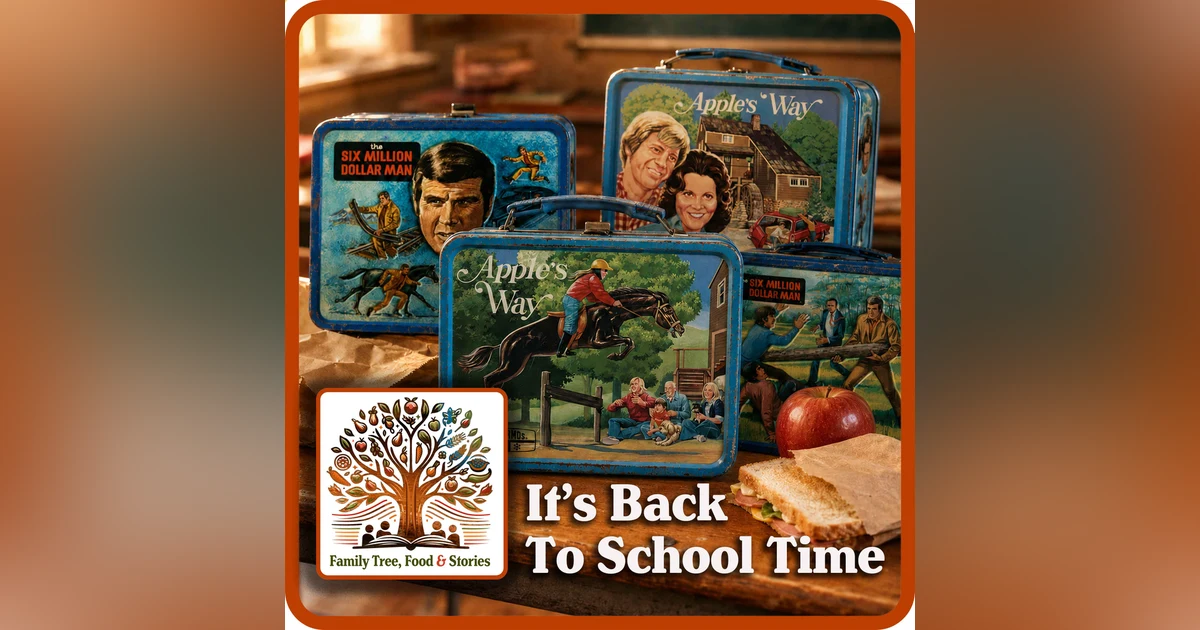
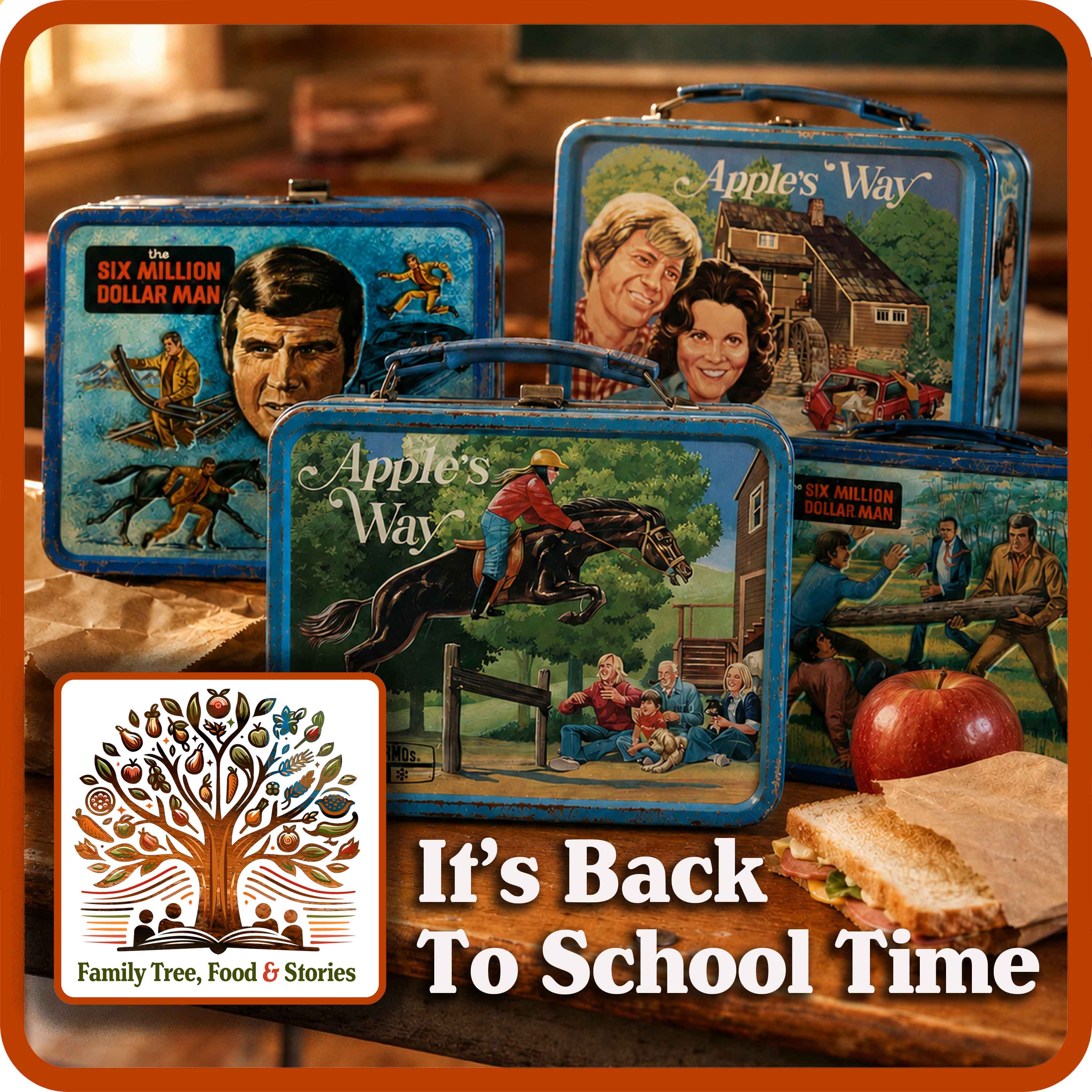
Speaker:But between 1950 and 1970, America bought over 120 million metal lunch boxes
Speaker:Sylvia S. France: Though, though those metal boxes had a dark side in the '70s.
Speaker:Yes, a Star Wars pun intended.
Speaker:Parents actually lobbied to ban them
Speaker:Nancy A. May: You know why?
Speaker:Well, that's because the kids were using them like blunt
Speaker:weapons in the playground fights.
Speaker:Yikes.
Speaker:Getting clobbered with a Star Wars box
Speaker:Sylvia S. France: I can imagine it being a mom of three boys how
Speaker:that would be used as a weapon
Speaker:Nancy A. May: Yeah.
Speaker:Hopefully a rock not inside
Speaker:Sylvia S. France: Well, that ushered in the plastic and
Speaker:vinyl era we all grew up with
Speaker:Nancy A. May: And that covers lunch boxes from home.
Speaker:But the story on the cafeteria tray, that's a fun one.
Speaker:That's where the government stepped in
Speaker:Sylvia S. France: Because when you look at a school cafeteria tray, you're
Speaker:actually looking at national history
Speaker:Nancy A. May: I never knew that until now.
Speaker:But this blew my mind, Sylvia, You know, our school lunch system didn't
Speaker:start with just plain old dieticians
Speaker:Sylvia S. France: Nope.
Speaker:It started with a good old military
Speaker:Nancy A. May: Marching down with plastic school lunch trays, I'm sure.
Speaker:But in 1946, Truman signs the National School Lunch Act
Speaker:Sylvia S. France: It was explicitly as a matter of national defense
Speaker:Nancy A. May: Because during World War II, over 40% of draft candidates were
Speaker:turned down or turned away from the military for health or physical reasons
Speaker:Sylvia S. France: Some researchers put malnutrition rejections at roughly
Speaker:one in nine draftees while military leaders told Congress it was even higher
Speaker:Nancy A. May: Now, I love this name because we are talking food.
Speaker:It was General Lewis Hershey.
Speaker:Actually, he testified that malnutrition cost the US over
Speaker:100,000 casualties in the war
Speaker:Sylvia S. France: So Truman signed the act to do two things at once: feed the kids
Speaker:Nancy A. May: And you got it, create a market for post-war
Speaker:agricultural surpluses Now here's the part most people don't know.
Speaker:The government was already feeding kids years before Truman ever signed anything
Speaker:Sylvia S. France: During the Depression, the WPA ran a patchwork school lunch
Speaker:program using surplus crops and hiring cafeteria workers as unemployment relief
Speaker:Nancy A. May: But in 1942, over five million kids in nearly 79,000 schools
Speaker:were already eating subsidized lunches
Speaker:Sylvia S. France: So 1946 didn't invent the idea.
Speaker:It took a decade of piecemeal relief programs and finally
Speaker:made it permanent federal law
Speaker:Nancy A. May: And a generation of American school kids grew up eating
Speaker:off a decision made for soldiers Now, because the government was sitting on
Speaker:massive reserves of surplus cheese, flour, and beef, schools had to get
Speaker:kind of creative with all that stuff
Speaker:Sylvia S. France: Kitchens had to feed hundreds of kids really fast
Speaker:using giant aluminum sheet pans
Speaker:Nancy A. May: Great for sledding and tobogganing in the
Speaker:wintertimes up north, for sure.
Speaker:Which brings us to the ultimate legend, the school cafeteria pizza
Speaker:Sylvia S. France: Uh, the classic rectangle
Speaker:Nancy A. May: And you might be saying, " Why rectangle?" Well, if you have 20
Speaker:minutes to make 50 pans of round dough … round dough is kind of a massive waste of
Speaker:time, and it really is a bad math problem
Speaker:Sylvia S. France: A grid cuts every kid the exact same slice in two seconds flat
Speaker:Nancy A. May: And in 1988, the USDA published the official formula
Speaker:manual specifying pourable crust.
Speaker:Get that one, right?
Speaker:And commodity cheese ratios were marked down to the exact ounce per slice
Speaker:Sylvia S. France: Can you imagine jugs of pourable pizza dough?
Speaker:I
Speaker:Nancy A. May: No, no.
Speaker:It's almost as bad as pourable pancakes.
Speaker:Not good in my book
Speaker:Sylvia S. France: no, no, no.
Speaker:Now, People still debate that portable crust was actually good, but
Speaker:everybody remember it for good or bad
Speaker:Nancy A. May: Yeah, every nonna who's ever lived is rolling
Speaker:over in her grave right now.
Speaker:, Okay, so now we have to jump to 1981
Speaker:- Sylvia S. France: Uh, are you talking the great ketchup debate
Speaker:Nancy A. May: I am
Speaker:Sylvia S. France: To save money, the USDA proposed counting ketchup
Speaker:and pickle relish as vegetables.
Speaker:I think they were listening too much to their kids
Speaker:Nancy A. May: Like yeah, broccoli for sure is not on that list.
Speaker:but a tablespoon of ketchup was considered a full serving of vegetables by the USDA.
Speaker:And you know what?
Speaker:Moms and dads were outraged.
Speaker:And because of that, yep, you got it, the government pulled it immediately
Speaker:Sylvia S. France: That's a really good thing.
Speaker:but it actually explains why kids are so suspicious of their trays.
Speaker:If you couldn't identify it, it instantly became mystery meat
Speaker:Nancy A. May: Yeah, and speaking of mystery meat, Sylvia I
Speaker:have a Bob story for you
Speaker:Sylvia S. France: A yet another Bob story.
Speaker:I
Speaker:Nancy A. May: I know.
Speaker:He's got a load of them.
Speaker:My Bob tells his story about his elementary school days back at the
Speaker:School of the Blessed Sacrament in the Bronx, New York, darling.
Speaker:Sylvia S. France: So okay, tell us.
Speaker:What did Bob say about meatloaf?
Speaker:Nancy A. May: well, he told me that the school meatloaf always
Speaker:had this very distinct and, well, kind of strong and weird smell.
Speaker:And one day he was at home helping his sister feed her cat
Speaker:Sylvia S. France: Oh, no.
Speaker:Nancy A. May: Oh, yes.
Speaker:He opened the can of cat food labeled horse meat, took one whiff
Speaker:and said, "Oh my God, that smells exactly like our school meatloaf
Speaker:Sylvia S. France: Oh, no.
Speaker:Poor Bob.
Speaker:has horse meat, meatloaf, and he has to eat eel.
Speaker:Nancy A. May: Yeah, not good.
Speaker:Eel from another show.
Speaker:But the nuns made him sit there and eat every single bite.
Speaker:I had to ask him that one.
Speaker:And thank goodness, I have to say, that I didn't go to Catholic school.
Speaker:- I'm a proud byproduct of the public school system
Speaker:Sylvia S. France: Me too.
Speaker:That's why we get along so well.
Speaker:Nancy A. May: Right.
Speaker:Sylvia S. France: So listener Michelle wrote In a sweeter note,
Speaker:though, her mom packed cream cheese and grape jelly sandwiches."
Speaker:Nancy A. May: I talked to her and that sounded so sweet.
Speaker:cream cheese and grape jelly.
Speaker:Kind of interesting combo, but it really is a nice story
Speaker:Sylvia S. France: Well, my best combo is peanut butter, butter,
Speaker:and Lay's potato chip sandwiches.
Speaker:That was a favorite of mine.
Speaker:Nancy A. May: I'll have to try that one.
Speaker:Sylvia S. France: Well, let's talk about sloppy joes.
Speaker:The sandwich is locked in this brutal origin dispute that
Speaker:people still get angry about
Speaker:Nancy A. May: Yeah, and I love sloppy joes at school, but Iowa swears a short
Speaker:order cook named Joe added tomato sauce , to a loose meat sandwich in the 1930s.
Speaker:And there's a totally separate legend as well.
Speaker:a Havana bar owner named Jose Garcia had a wet, messy floor in his restaurant,
Speaker:and Ernest Hemingway, who frequented the place, supposedly suggested that
Speaker:they just call the place Sloppy Joes.
Speaker:I can hear him now.
Speaker:Two different stories and two different countries, and nobody can prove that
Speaker:either one invented the actual sandwich.
Speaker:But enter USDA.
Speaker:They didn't care about the romance.
Speaker:They loved the sloppy joe because it was cheap, of course, canned,
Speaker:double of course, and stretched ground beef with fillers forever.
Speaker:And when you've got to feed thousands and thousands of kids,
Speaker:uniformity creates its own economy.
Speaker:. Then, of course, the cafeteria was a slightly different environment, and
Speaker:it was a child's first free market.
Speaker:the playground became a trading floor, and it was brutal.
Speaker:A single peanut butter bar, a cracker, or a snack when you didn't buy your sloppy
Speaker:joe could buy you serious social leverage
Speaker:Sylvia S. France: I wonder if Elon Musk or others honed their
Speaker:negotiating skills on the, playground.
Speaker:Nancy A. May: Probably.
Speaker:Sylvia S. France: I wouldn't be surprised.
Speaker:honestly, , but it got complicated if you brought a packed lunch from home,
Speaker:especially from an immigrant household.
Speaker:You opened up this incredible, aromatic home-cooked meal, and back
Speaker:in the day, it instantly clashed with the hyper-processed corporate
Speaker:packaging on everyone else's tray
Speaker:Nancy A. May: Yeah, I can smell it right now.
Speaker:and 11 years old, you just kinda wanna blend in.
Speaker:But the irony is that looking back, those lunches were a total luxury compared to
Speaker:some of the processed blocks of cheese that we were all fighting over back then
Speaker:Sylvia S. France: But fast-forward to right now, the packed lunch
Speaker:world has completely flipped.
Speaker:It's no longer about hiding your home lunch.
Speaker:It's an absolute status symbol.
Speaker:Have you been on TikTok lately during the back to school season?
Speaker:Nancy A. May: Yeah, I have sadly.
Speaker:But it's an incredibly detailed process of making these bento boxes.
Speaker:They're amazing.
Speaker:… I got anxious just looking at some of them, but the aesthetics and
Speaker:the artwork, totally out of control
Speaker:Sylvia S. France: It's an absolute arms race.
Speaker:It's all built around the rise of the modern multi-tiered bento box.
Speaker:Parents are waking up at 5:00 AM to pack these immaculate
Speaker:leak-proof silicon compartments.
Speaker:We are talking star-shaped cucumbers, berries arranged by color
Speaker:gradient, hand-rolled sushi, little animal-shaped food picks holding
Speaker:together organic turkey pinwheels
Speaker:Nancy A. May: Honestly, they look pretty amazing.
Speaker:, But coming up with new ideas every week takes time and which is why
Speaker:some parents are actually using a lot of AI tools like ChatGPT, Gemini,
Speaker:Claude, and others to plan lunches.
Speaker:I think that's pushing it a little bit much with just peanut
Speaker:butter and jelly works for me
Speaker:Sylvia S. France: And me too.
Speaker:Well, minus the jelly.
Speaker:You can type in what ingredients you have in the fridge, specifically
Speaker:what your child likes, and get a weekly plan in seconds.
Speaker:We went from federal standardized recipes in the 1950s to parents
Speaker:using digital assistants today just to keep lunches varied
Speaker:Nancy A. May: There goes the one bite, no thank you rule,
Speaker:right?
Speaker:But even K through 12 menus are evolving, and companies like Aramark Student
Speaker:Nutrition have decided that they're cutting artificial dyes like Red Dye No.
Speaker:40 ? For over 1.5 million students nationwide.
Speaker:Sylvia S. France: Plus global flavors, gochujang chicken,
Speaker:Hawaiian-style sandwiches.
Speaker:Definitely not our grandmother's mystery meat, or Bob's either
Speaker:Nancy A. May: No, for sure.
Speaker:And if you want to take it to the next level, although this wasn't my
Speaker:college, at college levels today, dining options have expanded even further.
Speaker:Many universities and dining halls are now operating more like full food courts
Speaker:or fancy restaurants and offering wide varieties of freshly prepared foods.
Speaker:Some campuses are even opening their dining facilities to the public and
Speaker:allowing neighbors to purchase meal passes or, get this, lobster night.
Speaker:Sylvia S. France: I know.
Speaker:Wasn't that Cornell or Columbia, one of those two
Speaker:Nancy A. May: One of them, but it's wild.
Speaker:Sylvia S. France: Sign me up for that one.
Speaker:Exactly.
Speaker:It's much better than my sorority food and
Speaker:Nancy A. May: Yeah, and my bean and bacon soup.
Speaker:Sylvia S. France: The worst was Chicken Divine, though.
Speaker:Ugh.
Speaker:So meal debt, food waste, and the fight over who pays right after this
Speaker:Nancy A. May: Stay tuned.
Speaker:We'll be right back
Speaker:So welcome back.
Speaker:Before our break, we brought up the student meal debt, and it's a big one
Speaker:Sylvia S. France: Right as pandemic era free meal programs ended,
Speaker:unpaid balances climbed nationwide
Speaker:Nancy A. May: Which led to heartbreaking situations.
Speaker:A lot of kids with unpaid balances didn't get alternative
Speaker:meals or even a meal at all
Speaker:Sylvia S. France: It's tough for everyone, but eight states have now
Speaker:passed permanent universal free meal laws
Speaker:Nancy A. May: Those are California, Colorado, Maine, Massachusetts,
Speaker:Michigan, Minnesota, New Mexico, and good old Vermont
Speaker:Sylvia S. France: every student gets breakfast and lunch regardless of income
Speaker:Nancy A. May: That's pretty cool, especially if you don't
Speaker:like what's at home with mom.
Speaker:And when every child is served exactly the same in the same way
Speaker:every single day, the old lunch stigma tends to fade dramatically
Speaker:Sylvia S. France: But then there's food waste.
Speaker:Guidelines require specific portions of fruits and vegetables
Speaker:Nancy A. May: And if kids only have 15 minutes to sit down, well, a lot
Speaker:of it ends up in the trash, sadly
Speaker:Sylvia S. France: I know.
Speaker:School waste roughly… half a million tons of food a
Speaker:year worth about $1.7 billion
Speaker:Nancy A. May: Whoa, that's a lot of money and a lot of food, which
Speaker:is why many schools now set up a share table for unopened food
Speaker:or, schedule recess before lunch
Speaker:Sylvia S. France: Scheduling recess actually cuts food waste by almost 40%.
Speaker:Kids eat much better when they aren't rushing to go play
Speaker:Nancy A. May: that makes a lot of sense, and actually it reminds me of
Speaker:a fellow master gardener I know of
Speaker:Sylvia S. France: What did she do?
Speaker:Nancy A. May: Well, a few years back she started a composting
Speaker:program at her daughter's school
Speaker:Sylvia S. France: Wait, composting the actual lunch trash?
Speaker:Half-eaten apples and crusts?
Speaker:Nancy A. May: I know.
Speaker:Kids probably thought it was gross, especially when they see flies.
Speaker:Sylvia S. France: But they like the
Speaker:Nancy A. May: Oh, they'll like the worms for sure, and that's exactly what it was.
Speaker:She taught the kids to sort scraps into bins instead of into the garbage pail
Speaker:Sylvia S. France: I think that's kind of a hard sell for a nine-year-old, honestly
Speaker:Nancy A. May: No, I think it's a good lesson too, and it was at first, but
Speaker:she had them help turn that pile so that they could see how it was working,
Speaker:and within a year, that compost was feeding the school's own vegetable garden
Speaker:Sylvia S. France: so the food waste didn't just disappear.
Speaker:It actually became next year's lunch, uh, in a way
Speaker:Nancy A. May: Kind of.
Speaker:But to plate to garden to plate.
Speaker:So honestly, I think kids need to learn exactly where their food comes from today
Speaker:Sylvia S. France: Glasses up one more time
Speaker:Nancy A. May: Absolutely.
Speaker:This time I think maybe it's orange juice or probably your mimosa.
Speaker:Sylvia S. France: I'll never tell
Speaker:Nancy A. May: To everyone who's ever packed a school lunch, served one,
Speaker:or ate one wondering, " what the heck was in that?" Clink, clink,
Speaker:. Sylvia S. France: Penny soup in the 1890s, character lunchboxes
Speaker:in the 1950s, school menus today.
Speaker:The cafeteria has always reflected how the rest of society eats and lives
Speaker:Nancy A. May: And back-to-school season connects families across the generations.
Speaker:You can't get that out of your mind.
Speaker:A season of new beginnings and quite the side odor of nerves for sure
Speaker:Sylvia S. France: As family historians, we spend a lot of time looking backward
Speaker:at census records and old photographs
Speaker:Nancy A. May: But we're also creating a living history right now for
Speaker:our kids and hopefully your kids
Speaker:Sylvia S. France: So here's your family story prompt for this
Speaker:week, the lunchbox interview.
Speaker:Sit down with a relative or your own child or grandchild and ask three questions
Speaker:Nancy A. May: Or maybe even a neighbor.
Speaker:Start a lunchtime conversation.
Speaker:The first question is, what was your favorite thing to find in your lunchbox?
Speaker:Sylvia S. France: Two, what was the one school meal you absolutely dreaded?
Speaker:Nancy A. May: And three, who usually made your lunch, and
Speaker:what did that morning look like?
Speaker:Sylvia S. France: Write down the answers or record a quick voice
Speaker:note and tuck the story inside your copy of My Family Tree Food Stories
Speaker:Nancy A. May: Of course.
Speaker:And share it with us at Podcast.FamilyTreeFoodStories.com.
Speaker:We love reading your notes, and we love hearing from you, and we might just share
Speaker:yours in one of our upcoming episodes
Speaker:Sylvia S. France: Thanks so much for joining us today.
Speaker:Please leave us a review and share this episode with a friend
Speaker:who loves a good food story
Speaker:Nancy A. May: And we're glad you're here with us.
Speaker:So we'll see you next Thursday when next week we're talking
Speaker:about the dog days of summer
Speaker:Sylvia S. France: There's a fun surprise you'll never guess.
Speaker:Bye everyone.
Speaker:Nancy A. May: Bye-bye
Speaker:Sylvia S. France: Happy cooking and happy experimenting
Speaker:Nancy A. May: Cheers.