Is Your Nona's Italian American Sauce "REAL" Italian? Maybe Not!
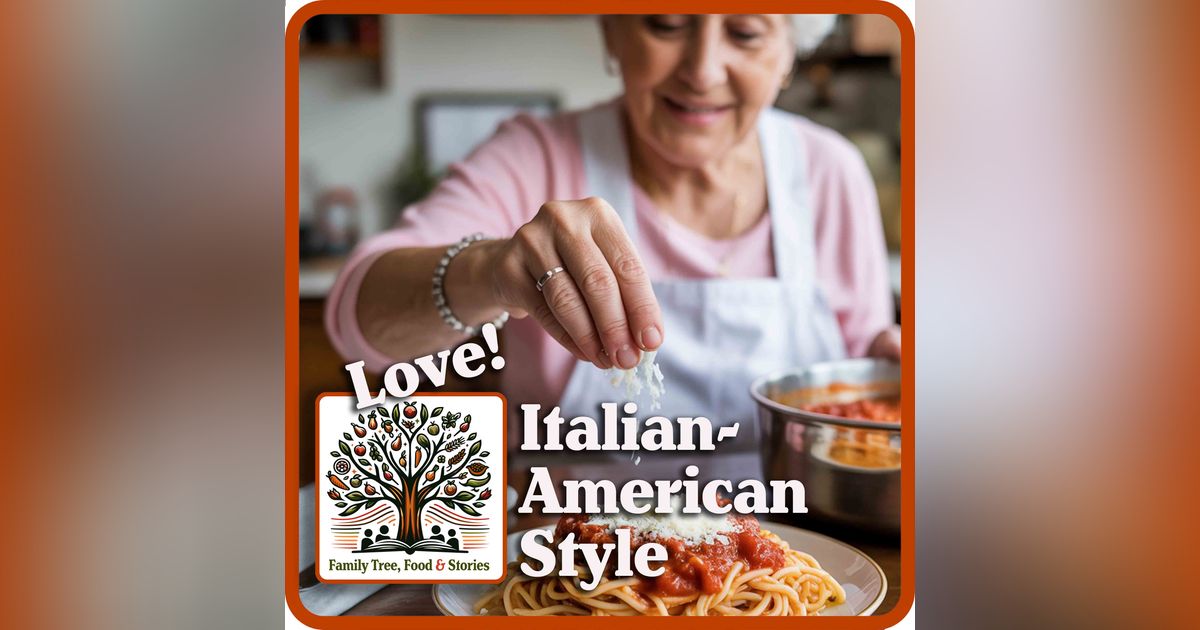



Italian Food in America: The Truth About Authenticity, Nonas, and Sunday Sauce.
When you're planning which restaurant to go to, you typically don't ask, “Do you want American food?” No, you ask... "How about Italian?”
But here’s the twist… much of what we call authentic Italian food isn’t actually from Italy. It's kind of a made-up Italian, American style!
In this episode of Family Tree Food & Stories, Nancy May and Sylvia Lovely unpack the real story behind Italian-American cuisine, how it's more of a blending of what we had here, and how adaptation shaped everything from lasagna and chicken parm to pasta and even the right San Marzano tomatoes. If you’ve ever debated your Mom's marinara vs. Nona's Sunday sauce—or wondered why meatballs are bigger here than in Italy, you'll want to tune in to learn more.
Interestingly enough, Italy wasn’t even a unified nation until the 1800s. Its food traditions were regional, hyper-local, shaped by geography, and published cookbooks. Families in the mountain villages cooked differently than those in small coastal towns. Meat was scarce. Recipes were instinctual. Nonas didn’t measure. They remembered and passed on the feeling of what to do to their daughters and sons.
But then immigration changed when families went to find a new homeland.
In America, meat became affordable. Flour was abundant. Tomatoes were more often than not canned. Portions grew - Maria said, "What's the matter, you don't like my food," when you couldn't finish your dinner.
Layers stacked. And what emerged wasn’t a copy of what we thought was Italian. It was really instead, something new: Italian-American food, a cuisine built on resilience, memory, and opportunity.
Key Takeaways:
- How immigration transformed Italian food in America
- The difference between tomato sauce, marinara, and real Sunday gravy
- Why semolina flour and wheat quality matter in your pasta
- And why Italian food feels like family, even if your grandmother wasn’t a Nona
This episode of Family Tree Food & Stories blends food history, real storytelling, and a little kitchen humor, because Italian food isn’t just about pasta, it's about using all your senses and a little dash of garlic and memory. It also helps to pour a lot of wine into that sauce (and the glass), and a chance to stay at the table long after the plates are cleared.
Additional Links ❤️
Please don't forget to take our survey so we dish up even more for you: Click for Survey Here
- SURVEY: Please Help Us Learn How To Do More For You
- Book: My Family Tree, Food & Stories Journal Awarded #1 New Release on Amazon
- Instagram Story updates 📸
- Facebook Family Tree Food Stories GROUP👍
- TikTok: Family Tree Food Stories
- 👇Share Your Story With Nancy & Sylvia!: Leave us a voicemail
- You can send us a DM on Facebook.
- 🎧 Subscribe now and never miss a bite or a good story.
If you enjoy food and stories that make you smarter, more curious, and just a little dangerous at the dinner table… then Follow Us at Family Tree Food & Stories.
Subscribe so you don’t miss the next episode.
And share this one with someone you love to share your table with.
Because once you understand the story behind food, you start seeing everything differently.
About Your Award-Winning Hosts: Nancy May and Sylvia Lovely are the powerhouse team behind Family Tree, Food & Stories, a member of The Food Stories Media Network, which celebrates the rich traditions and connections everyone has around food, friends, and family meals. Nancy, an award-winning business leader, author, and podcaster, and Sylvia, a visionary author, lawyer, and former CEO, combine their expertise to bring captivating stories rooted in history, heritage, and food. Together, they weave stories that blend history, tradition, and the love of food, where generations connect and share intriguing mealtime stories and kitchen foibles.
If you missed the first time around... now's your time to listen to Family Tree Food & Stories and get inspired to make better use of what’s already in your kitchen. Then visit our page to share how you're using your leftovers this year. Waste less. Cook smarter. Tell the story behind your fridge.
"Every Meal Has a Story, and Every Story is a Feast." (tm) is a trademark of Family Tree Food & Stories podcast and the hosts.
@familytreefoodstories @AzurRestaurantandPatio #italianfood #nonas #sundaysauce #bestfoodpodcast #foodiepodcast #foodblooger #spaghetti #realposta #italianamerican #pizza #pasta #sauce
Hey everybody, it's Nancy and Sylvia once again from
Nancy May:Family Tree Food and Stories.
Nancy May:if you are a long time listener and we hope you are, and if you're new
Nancy May:here, welcome because we wanna share a little bit more about what's going
Nancy May:on in the future of family tree food and stories, because food isn't
Nancy May:just about what's put on your plate.
Nancy May:There's so much richness that's going on, and we are trying to find out a little bit
Nancy May:more from you, what you're interested in.
Nancy May:We know a lot of things that are going on, But we have created a survey and if
Nancy May:you would be kind enough, dear listener, again, I feel like Bridger Tin Gentle
Nancy May:Reader, one of my favorite shows.
Nancy May:You get a glimpse inside of what happened , in Nancy's household.
Nancy May:But anyway if you would go to the link at the bottom of the
Nancy May:show notes on survey and just.
Nancy May:Take a few minutes to let us know your thoughts and ideas and where
Nancy May:you're listening from, and we would greatly appreciate that support As
Nancy May:well as sharing the show with your friends, your family, and others,
Nancy May:because as we say, Sylvia, what is it?
Nancy May:Every meal is a story and every story is a feast.
Nancy May:And let's get on with this feast, because today we are talking mumbo, italiano,
Nancy May:every, everything's delicious, right?
Sylvia Lovely:Absolutely.
Sylvia Lovely:Let's go.
Sylvia Lovely:I'm tasting that taste.
Sylvia Lovely:In fact, I'm gonna do that for lunch.
Sylvia Lovely:Because it freezes.
Sylvia Lovely:Well, that's one thing.
Sylvia Lovely:'cause as empty nesters.
Sylvia Lovely:Bernie and I don't ever eat enough.
Sylvia Lovely:You know how Italian food is, you make huge quantities of
Nancy May:right.
Nancy May:Nobody ever comes with, a
Nancy May:small amount.
Sylvia Lovely:yeah.
Sylvia Lovely:So you either give it away or you freeze it and it freezes in these great
Sylvia Lovely:chunks and it falls out beautifully.
Sylvia Lovely:you go.
Nancy May:thing is that when you go out to dinner with friends, other
Nancy May:than I'm sure you only go to Azure Restaurant, but if you go someplace else.
Sylvia Lovely:True.
Sylvia Lovely:Yeah.
Nancy May:If you go someplace else, don't you have that conversation
Nancy May:like, well, what do you want to eat?
Nancy May:Do you want Chinese?
Nancy May:Do you want Japanese?
Nancy May:Do you want Italian?
Nancy May:You never typically ask, do you want American food?
Sylvia Lovely:That's That's right.
Sylvia Lovely:Although we describe ourselves as a New American, but I haven't
Sylvia Lovely:figured out what that is.
Sylvia Lovely:It's, it's high-end food but there's also comfort food mixed in there.
Sylvia Lovely:And then our Italian, when we have an Italian special.
Sylvia Lovely:A chicken parm or something like that, it goes over really well.
Sylvia Lovely:Or if we have a special Italian dinner, it's always full.
Sylvia Lovely:not so much game dinner that's probably the lowest attended.
Sylvia Lovely:But the Italian dinners are huge.
Nancy May:really interesting.
Nancy May:I think it just evokes where we all want to get together.
Nancy May:It's family, it's food,
Nancy May:It's comfort, and I've never had a bad Italian meal, period.
Sylvia Lovely:Well, I almost did, when I screwed up lasagna once.
Nancy May:That
Sylvia Lovely:you.
Sylvia Lovely:gotta be brilliant to put lasagna together.
Sylvia Lovely:I've concluded, and I'm not, but I got the entire set of ingredients
Sylvia Lovely:all laid out and I was putting it all together like you're supposed to.
Sylvia Lovely:And I realized at the end I hadn't put in the noodles.
Sylvia Lovely:I mean, that's
Sylvia Lovely:like essential.
Sylvia Lovely:Anyway, what I did was I tried to squish 'em in, so it was
Sylvia Lovely:a casserole, not a lasagna.
Nancy May:Well, that's because you're Irish.
Nancy May:You're not Italian.
Sylvia Lovely:There.
Sylvia Lovely:You.
Sylvia Lovely:Okay, there you go.
Sylvia Lovely:We have a certain kind of brilliance, but it's not that.
Sylvia Lovely:But anyway Italian food is what we grew up in.
Sylvia Lovely:America didn't come straight from Italy in the way we can imagine.
Sylvia Lovely:It came through immigration and adaptation memory, and quite honestly, necessity.
Sylvia Lovely:They came over here.
Sylvia Lovely:They figured out what they could have.
Sylvia Lovely:And I mean, these people were amazing in terms of how they adapted to
Sylvia Lovely:the taste of Americans in the late 19th century, early 20th century.
Sylvia Lovely:They started exceeding, the Irish who were coming in and droves in the late 19th and
Nancy May:But
Nancy May:It was the ingredients that they could get here, I guess.
Nancy May:Versus the type of ingredients that you can get there.
Nancy May:Now I have to say, the tomatoes in Italy at.
Nancy May:Least around Rome and the Amalfi coast area where I had been, are the most
Nancy May:delicious tomatoes I have ever tasted, except for some little tiny like grape
Nancy May:tomatoes that Bob and I grew one year in an apartment that we were renting, and
Nancy May:the front field had been a horse field.
Nancy May:You can imagine how rich that soil was and the tomatoes
Nancy May:never made it into the house.
Sylvia Lovely:Oh, I know.
Sylvia Lovely:Don't you love a tomato where you, it's like you eat it like an apple.
Nancy May:And it's sun soaked
Sylvia Lovely:and it drips down your,
Sylvia Lovely:face.
Sylvia Lovely:But yeah,
Nancy May:well,
Sylvia Lovely:hey Nancy.
Sylvia Lovely:Talking about Nona.
Sylvia Lovely:Why Nona?
Sylvia Lovely:I mean, isn't there something, hint, hint on Netflix or was about
Nancy May:gosh.
Nancy May:There is, if you have not seen it, we'll put , a link in the show notes.
Nancy May:There is a Netflix movie
Nancy May:Nonas, which is Italian for grandma, basically.
Nancy May:And it's all about this guy who works for the city of New York.
Nancy May:I think it's the buses and the loss of his family, his grandmother, his
Nancy May:mother, and I think Italian food more than any food has this connection to.
Nancy May:Grandmothers stir pots and I can just, I can smell it
Sylvia Lovely:in this movie.
Sylvia Lovely:It wasn't his restaurant failing.
Nancy May:It was failing and we don't wanna give it away, but
Nancy May:ultimately it is resurrected with.
Nancy May:A series of Nonas
Nancy May:Who have lost their spouses and their family, and the kitchen again becomes
Nancy May:a place of healing, not just for them, but for an entire community.
Nancy May:Honestly, I do believe that a kitchen.
Nancy May:Well, a home, but really especially the kitchen is the place that we
Nancy May:all end up gravitating to at a party or at somebody else's house.
Nancy May:there's something that is so comforting about the smell of cooking Sunday
Nancy May:sauce, as they called it, right?
Sylvia Lovely:Sunday sauce.
Sylvia Lovely:Yeah.
Sylvia Lovely:And
Sylvia Lovely:it sis a long time.
Sylvia Lovely:Well, I'm a grandma, but I'm not a Nona.
Sylvia Lovely:That would be an aspirational goal.
Sylvia Lovely:Okay.
Sylvia Lovely:But let me go on and say that one of the biggest misconceptions is
Sylvia Lovely:that Italy is a single, unified food tradition and it isn't.
Sylvia Lovely:And this is interesting.
Sylvia Lovely:I love doing this research because Italy is a relatively young.
Sylvia Lovely:Unified nation, and that only happened in the mid 18 hundreds.
Sylvia Lovely:I mean, they're just babies, right?
Nancy May:compared to the rest of Europe.
Sylvia Lovely:it was a patchwork of city, states, kingdoms and regions,
Sylvia Lovely:and they functioned individually and independently for centuries.
Sylvia Lovely:And food was the same way.
Sylvia Lovely:So it was hyperlocal, extremely local.
Sylvia Lovely:And that'd be like from one.
Sylvia Lovely:Village to the next.
Sylvia Lovely:It was shaped by geography, not by recipes.
Sylvia Lovely:Mountain communities cooked differently than coastal ones.
Sylvia Lovely:Inland islands and some of them are relied on pork grains preserved foods.
Sylvia Lovely:Coastal towns leaned into seafood.
Sylvia Lovely:What could be traded and what could be preserved, determined what the people
Sylvia Lovely:ate, not cookbooks and not trends.
Nancy May:And I think that's so important from the storytelling aspect
Nancy May:that, we hear a. Of families passing down the history of the recipes and what
Nancy May:happened in their households because Nonas didn't just cook from recipes
Nancy May:she created from instinct and memory
Nancy May:like her mother did.
Nancy May:Now I don't, I didn't have a Nona either.
Nancy May:My grandmother, I don't even remember her cooking 'cause she was in a wheelchair.
Nancy May:I remember her brilliant smile and every time I saw her she
Nancy May:just lit up like the sun.
Nancy May:I look back at my grandma, we called her Grammy, and I just
Nancy May:see this big grin and curly hair
Sylvia Lovely:Nice.
Nancy May:so it's a different type of grandma.
Nancy May:But you have two kinds of, Italian grandmothers from the regions with
Nancy May:the same kind of name like the Nonas but they create with different
Nancy May:things and different dishes.
Nancy May:Garlic and tomatoes to those that barely touch them.
Nancy May:And meat, like you said, in different ways.
Nancy May:Honestly, I think here in the United States that there
Nancy May:is something similar North,
Sylvia Lovely:Mm-hmm.
Nancy May:east, west,
Nancy May:and you end up, but for some reason we think of it as an Italian thing,
Nancy May:And meat was expensive in Italy, but meat was expensive here, which
Nancy May:is I guess why, well, my sister has cattle, so they butcher and
Nancy May:was like, I'm not going to eat.
Nancy May:Betty Joe, the cow.
Sylvia Lovely:I know I'm a weenie like that too.
Sylvia Lovely:Give me, don't tell me where it came from.
Nancy May:But a bones create soup and specials and, small pieces of
Nancy May:panachetta and just the sausage.
Nancy May:The other day we were talking sausage with neighbors and although it's not
Nancy May:Italian, we ate oh, I'm trying to think, drawing a blank on, but it was
Nancy May:a spicy kind of sausage that we had bought at a local butcher figuring,
Nancy May:oh, let's try what they've made there.
Nancy May:It wasn't very good.
Nancy May:It was
Nancy May:dry and
Nancy May:Not something that I really would've enjoyed.
Nancy May:And Kathy, our local neighbor, said oh, it was chorizo.
Nancy May:That's what it was.
Nancy May:It was chorizo sausage.
Nancy May:And I loved it up north when it's more dried.
Nancy May:This was, yeah, not too good.
Nancy May:But she says, oh, we don't cook with that, and we won't eat that.
Nancy May:We cook with it.
Nancy May:So it's a flavoring.
Nancy May:Which is kind Like the Italian thing, right?
Nancy May:You have the flavor of little, tiny pieces of meat that add to
Nancy May:the stew that make it so rich, and it's about a restraint in balance.
Sylvia Lovely:I love that.. , I'm gonna make your mouth water.
Sylvia Lovely:Okay.
Sylvia Lovely:I had to look this up because I just frankly didn't know the difference.
Sylvia Lovely:What is panchetta?
Sylvia Lovely:Bacon and prosciutto.
Sylvia Lovely:I'll give you a quick primer on that.
Sylvia Lovely:Okay.
Sylvia Lovely:The panchetta is salt cured.
Sylvia Lovely:Not smoked.
Sylvia Lovely:And it's from the bottom of the pig.
Sylvia Lovely:you can eat it raw, by the way.
Sylvia Lovely:The
Nancy May:I think of that fatty pieces
Sylvia Lovely:Yeah, the
Nancy May:like, like, a lot of fat.
Nancy May:Okay.
Sylvia Lovely:Yeah.
Sylvia Lovely:Okay.
Sylvia Lovely:So you move to bacon.
Sylvia Lovely:Now, bacon, you cannot eat raw.
Sylvia Lovely:It's cured and it's smoked, and it must be in the curing
Sylvia Lovely:process if you're salt cured.
Sylvia Lovely:I mean, I'm no expert at that list, but it would be a preservation thing.
Sylvia Lovely:Now, prochuteo
Nancy May:but smoking in the south, you, your
Sylvia Lovely:yeah.
Sylvia Lovely:Oh, absolutely.
Sylvia Lovely:The smokehouse, I grew up going to my mother grandmother's house
Sylvia Lovely:and they had the smokehouse where they kept all of those
Sylvia Lovely:good juicy pigs.
Sylvia Lovely:Like maybe, so the Irish probably, whatever.
Sylvia Lovely:Prosciutto though.
Sylvia Lovely:it's off the hind leg
Nancy May:Ah,
Sylvia Lovely:of the pig and it's dry cured and it takes a year.
Sylvia Lovely:to do that prosciutto and you can eat it raw.
Sylvia Lovely:In fact, that is the preferred way to eat it.
Sylvia Lovely:It is frequently on charcuterie plates, for
Nancy May:yeah, I've never heard of cooking that, but I absolutely adore it.
Nancy May:I could eat about.
Sylvia Lovely:Yeah.
Nancy May:that
Sylvia Lovely:I know, and I try not to, but
Sylvia Lovely:yeah, it's
Sylvia Lovely:so anyway, getting back, I just wanted to make your mouth water Okay.
Sylvia Lovely:On that.
Sylvia Lovely:So getting back to talking about Italian food because, seasonality
Sylvia Lovely:mattered in Italy and you ate tomatoes and again, like you said.
Sylvia Lovely:This is happening here too.
Sylvia Lovely:A lot of people won't eat tomatoes now that are out of season.
Sylvia Lovely:' cause I go into my
Sylvia Lovely:local grocery store and it's like they taste like cardboard.
Sylvia Lovely:But you know, one of the most interesting things that I read once cannot swear that
Sylvia Lovely:it's true, but it was a long time ago that they did an experiment at , university
Sylvia Lovely:of Florida, where they fed kids, hot house tomatoes versus freshly grown.
Sylvia Lovely:They preferred the hot house ones.
Nancy May:Really?
Sylvia Lovely:taste buds have changed, but I think they're changing back.
Sylvia Lovely:. So anyway that's a background of Italian food and then how it became Americanized.
Sylvia Lovely:I.
Nancy May:Well in Americanized, There was big flavors and big traditions, and
Nancy May:it just became like an overabundance and.
Nancy May:Meat was less expensive than it was over there.
Nancy May:and flour was plentiful, and tomatoes, especially canned, were
Nancy May:all available everywhere else.
Nancy May:And it changed how people cooked.
Nancy May:So I like the meatballs, that were like mumbo meatballs.
Sylvia Lovely:Oh yeah.
Sylvia Lovely:Oh yeah.
Nancy May:meatballs and the Saturday Night Live meatball story.
Nancy May:But we, well, I'll maybe I'll put the link in that one too.
Sylvia Lovely:Oh, I'm intrigued.
Nancy May:too many Schwety there there was a different kind
Nancy May:of flavor that we moved into.
Nancy May:When things are large, I don't think of flavor as much.
Nancy May:I think of flavor in smaller, tinier little pieces.
Nancy May:Maybe I'm wrong.
Nancy May:What do you think
Sylvia Lovely:Oh, I, think there is a real revolution in meat.
Sylvia Lovely:Now, let me go back the other way, because of the new food.
Sylvia Lovely:Table, or whatever you wanna call it, the pyramid at trying
Sylvia Lovely:to encourage people to eat more meat because of the protein craze.
Sylvia Lovely:I actually am trying to cut back on it and putting things together and
Sylvia Lovely:going back to that old way of thinking.
Sylvia Lovely:and one of the things about in Italy, and I've not been there, but it's, and
Sylvia Lovely:I've heard about this, you have three, I gave a primo second, and they're
Sylvia Lovely:small portions and an ending plate.
Sylvia Lovely:And America, our dishes are full of all at the same time.
Sylvia Lovely:We do a lot of the layered things, more layered things than they did in Old Italy.
Sylvia Lovely:And I think.
Sylvia Lovely:That is interesting and I've also went down the rabbit hole with sauce.
Sylvia Lovely:You have tomato sauce, which is thinner and takes a long, cooking marinara
Sylvia Lovely:sauce, which is cooking for a short time.
Sylvia Lovely:And let me see here.
Sylvia Lovely:And Sunday sauce with meat.
Sylvia Lovely:So is those three different sauces and I'm not sure I could attest to knowing
Sylvia Lovely:exactly, because I don't cook enough.
Sylvia Lovely:Do you know that I a difference in those three things
Nancy May:yeah , I didn't know they actually had different names, but I
Nancy May:have to say, I am a meat sauce person.
Nancy May:Don't give me
Sylvia Lovely:Oh, I do too.
Nancy May:tomato on, on pasta sauce without meat in it and, yeah.
Nancy May:No, that's the way I grew up.
Nancy May:Mom was not Italian.
Nancy May:She was.
Nancy May:From English, English, heritage, and my dad was, English German American.
Nancy May:So yeah, that's
Sylvia Lovely:you ate meat.
Sylvia Lovely:Yeah.
Nancy May:Tomatoes.
Nancy May:Tomatoes seem to be the thing that brings everything together in at least in the
Nancy May:opinion of American Italian, right?
Nancy May:There's tomato sauce on pizza.
Nancy May:There's tomato sauce on chicken parm.
Nancy May:There's tomato sauce on, unless it's just oil and vinegar or butter and vinegar and
Nancy May:then, or butter, I shouldn't say butter
Nancy May:beer, but it's really an oil and garlic and a lighter sauce.
Nancy May:But it's those two and so if you're listening in, you're true Italian.
Nancy May:I apologize for my ignorance on this,
Nancy May:but,
Sylvia Lovely:Yeah.
Sylvia Lovely:Yeah.
Sylvia Lovely:Let us know if we're being ignorant.
Sylvia Lovely:We'd love to hear from you.
Nancy May:But I was in this grocery store, a local sprouts grocery store,
Nancy May:and I can't help but hear this guy talk.
Nancy May:He has a very New York accent,
Nancy May:Strong Italian well that maybe that's not a strong Italian accent, but it
Nancy May:was a very New York accent clipped and strong, and he was so instructional
Nancy May:in explaining how this particular brand of canned tomato was the best.
Nancy May:He swore by Cento, C-E-N-T-O.
Nancy May:And then I asked him, so what is this?
Nancy May:But then he also heard the mutti, the MUTI and Valfuta,
Nancy May:V-A-L-F-R-U-T-A are the brands.
Nancy May:He said, but he preferred cento because they all, well, all of
Nancy May:them specialize in the San Marzano
Nancy May:From Italy and years back.
Nancy May:Now this goes years back.
Nancy May:I had been introduced to a fellow who I actually got a call, from the FBI
Nancy May:on, which is another story about how the tomatoes are selected.
Nancy May:And this other guy who I got the call on, he was involved in some sort of
Nancy May:nefarious acts, which I was not involved in, and I didn't even know it at the time.
Nancy May:But he was an expert that searched these tomatoes in Italy for the
Nancy May:right tomatoes for the particular.
Nancy May:Company, that he was working with.
Nancy May:And not the company and the individual have anything to do with, don't Call Me.
Sylvia Lovely:Yeah.
Nancy May:But it was fascinating to hear how they had to be certified
Nancy May:San Marzano tomatoes in order to be included in these particular
Nancy May:brands.
Nancy May:Yep.
Sylvia Lovely:remember that.
Nancy May:Valfuta is known to be a hundred percent Italian grown
Nancy May:tomatoes using steamed cooked process to put them in the cans, and the
Nancy May:cento is known for the certified San Marzano tomatoes grown in.
Nancy May:Sarnai NATO area, if I'm correct, it's probably nato.
Nancy May:' cause C is hard in Italy.
Nancy May:, And then the Pomo Dore, which was also another brand that uses
Nancy May:a cherry tomato that sweetens it up a little bit, which I can see.
Nancy May:But go and look at the cans and see what kind of tomato they
Nancy May:are and where they're from.
Nancy May:Very much like , olive oil.
Sylvia Lovely:yes, of course olive
Nancy May:If you don't look at the country of origin on the back of the
Nancy May:olive
Nancy May:oil.
Nancy May:You have to be careful.
Nancy May:'cause it could not be original Italian olive oil.
Nancy May:It could be from, the Middle East or someplace else.
Nancy May:And
Nancy May:I had some olive oil that was
Nancy May:really nasty.
Nancy May:It was from the wrong region.
Sylvia Lovely:Infused with something it can go bad and you
Sylvia Lovely:don't wanna do that, but yeah.
Sylvia Lovely:Before we take a break, I wanted to also say a couple of things.
Sylvia Lovely:One, uniquely American dishes include things like chicken parm.
Sylvia Lovely:Again, we're talking baked, layered baked zdi lasagna.
Sylvia Lovely:They just.
Sylvia Lovely:Make them differently here because we tend to layer things and you eat
Sylvia Lovely:everything all in, one fell swoop.
Sylvia Lovely:I guess it's a convenience thing that's a US kind of thing too.
Sylvia Lovely:But I did wanna mention there's also pasta in the wheat in Italy and Europe.
Sylvia Lovely:Is at least rumored to be of a better quality.
Sylvia Lovely:It has less gluten.
Sylvia Lovely:There's less additives because it's more highly regulated as
Sylvia Lovely:far as what can go into it.
Sylvia Lovely:And thus it is better for digestion.
Sylvia Lovely:And I just hear this over and over, Nancy about how European wheat differs
Sylvia Lovely:from ours and it tastes better.
Sylvia Lovely:I don't know.
Sylvia Lovely:what do you use when you go to, the grocery store?
Nancy May:let's take a break because I wanna introduce that concept and that
Nancy May:conversation that I've had with a fellow that I grew up with who now manufactures
Nancy May:and produces and has an invented pasta machines, large commercial pasta machines.
Nancy May:So we'll be right back.
Nancy May:Okay, Sylvia, we are back and we're talking pasta and flour and the
Nancy May:important things in making Italian food.
Nancy May:Well, not that all Italian food has pasta, but a little bit more rich.
Nancy May:And as I had mentioned, joe, a fellow that I had grown up with in high school.
Nancy May:I didn't know Joe too well back then, but we've reconnected
Nancy May:on Facebook and he corrects me when I'm wrong on Italian stuff.
Nancy May:So, Joe, if you're
Nancy May:listening, I
Sylvia Lovely:Joe,
Nancy May:hope you're listening.
Sylvia Lovely:help.
Nancy May:But the interesting thing is that , he's manufactured
Nancy May:these machines that are very technical designed for commercial
Nancy May:production of high quality pasta.
Nancy May:he was explaining to me at one point that really the best flour is typically.
Nancy May:semelina flour.
Nancy May:Now different weights.
Nancy May:So if you are doing home milling is a big thing now for flour.
Nancy May:So you buy the grains
Nancy May:that are from somewhere else that are more organic.
Nancy May:And I guess more original grains than they are today, at least here in the states.
Sylvia Lovely:Ancient grains.
Nancy May:Ancient grains.
Nancy May:Thank you.
Nancy May:That's what I was thinking.
Nancy May:Ancient grains.
Nancy May:But you can mill it down to a double zero which is very fine.
Nancy May:But I have been enjoying a brand which is in our closet, and I,
Nancy May:it's like a thicker or a wider noodle, and it's a grainy selina.
Nancy May:So I am now.
Nancy May:When I go buy pasta, I really make sure that it has the Salina and
Nancy May:the dorm wheat combination in it.
Nancy May:but it's it's a little bit more grainy in flavor.
Nancy May:It
Sylvia Lovely:I've heard of it.
Sylvia Lovely:but I have no idea where the name came from, but I wonder if
Sylvia Lovely:it's some region of Italy semolina
Sylvia Lovely:or
Sylvia Lovely:somewhere else.
Sylvia Lovely:I don't
Sylvia Lovely:know.
Sylvia Lovely:Anyway, a interesting factoid.
Nancy May:But making pasta from scratch is a lot of fun.
Nancy May:It's a
Sylvia Lovely:Yeah.
Nancy May:fun.
Sylvia Lovely:Well I think I will
Sylvia Lovely:pass
Sylvia Lovely:on that, but,
Nancy May:one.
Nancy May:I'll have to make some
Sylvia Lovely:but we do that at the restaurant.
Sylvia Lovely:Make it make our own pasta, but again, we also buy it from a place
Sylvia Lovely:that does that's our only job.
Sylvia Lovely:So anyway, it tastes good to me.
Sylvia Lovely:Alright.
Sylvia Lovely:So.
Sylvia Lovely:This is where people get hung up on authenticity.
Sylvia Lovely:You hear people say, that's not real Italian food, and historically that
Sylvia Lovely:might be true, but you know what?
Sylvia Lovely:Authenticity isn't only about accuracy.
Sylvia Lovely:It's about meaning Italian American food isn't a diluted version of Italian food.
Sylvia Lovely:It's a new cuisine brought out by specific moment in history.
Sylvia Lovely:And again, just going back to what we said before, it points to the
Sylvia Lovely:adaptation and, utter brilliance of the immigrants who came over and
Sylvia Lovely:adapted their style and created in the meantime a whole new cuisine.
Nancy May:It's truly an American.
Nancy May:combination,
Sylvia Lovely:So the food didn't become less meaningful, it became layered,
Sylvia Lovely:and those layers are exactly what make it worth talking about and sharing.
Sylvia Lovely:And that's what Italian American food is.
Sylvia Lovely:It is something unto itself.
Nancy May:And it's about stories.
Nancy May:So before we go, I have this little story.
Nancy May:There was an Italian barber Angelo that Bob used to go to in.
Nancy May:New Rochelle New York and Bob would make his homemade wine with blends of things.
Nancy May:Now we're talking Italian wine, not necessarily with a barber.
Nancy May:It's Italian wine
Nancy May:with us, one day Angelo comes in and says Bob, you have to have some of my wine.
Nancy May:So he gives us this bottle of wine that he makes in his garage.
Nancy May:Oh my God.
Nancy May:We were talking about it yesterday.
Nancy May:He said, you could almost chew this wine.
Nancy May:It
Sylvia Lovely:Really?
Sylvia Lovely:I mean, was
Nancy May:thick.
Sylvia Lovely:I mean, No,
Nancy May:so so I guess that, blast through the idea that all Italian food,
Nancy May:whether it be wine or food, is good,
Sylvia Lovely:Mm.
Nancy May:not necessarily
Sylvia Lovely:There you go.
Sylvia Lovely:the myth.
Nancy May:And I have to say that some of the worst food that I've had
Nancy May:on my travels have been in Italy.
Nancy May:So
Sylvia Lovely:I love that.
Sylvia Lovely:I love that.
Sylvia Lovely:But let's eat Italian.
Sylvia Lovely:Oh, I mean, I'm about as far from looking Italian as you could get, but I love it.
Nancy May:Yeah, and I think the whole thing about Italian food and
Nancy May:families in general getting together, especially if there's some Italian
Nancy May:influence, is the banter that goes on at the table and the kitchen and the
Nancy May:And no, you don't do it that way.
Nancy May:Nona didn't do that way.
Nancy May:Yes, you did do it that way.
Nancy May:No, you didn't do it.
Nancy May:Let me show you how to do it.
Nancy May:it's.
Nancy May:It is all about the stories and the love and the connection
Sylvia Lovely:Yes.
Nancy May:and ultimately at the end, everything tastes good
Nancy May:because you're with people that you love and you care about.
Sylvia Lovely:Even my messy lasagna tasted just fine.
Nancy May:I can taste it right now.
Sylvia Lovely:Although, you know what?
Sylvia Lovely:Something you taught me you forgot you taught me this.
Sylvia Lovely:Put some wine, red wine in your
Nancy May:Oh.
Sylvia Lovely:sauce, right?
Nancy May:I have to tell you, lots of red wine.
Nancy May:In fact, I made some, the other day.
Nancy May:I made spaghetti sauce with meat.
Nancy May:Of course, I won't do it without meat, and about a half
Nancy May:a bottle of wine went in there.
Nancy May:And if that
Nancy May:cooks down,
Sylvia Lovely:yeah, I'm gonna do that.
Sylvia Lovely:Gives me an excuse to make some more.
Sylvia Lovely:I wanna do that.
Nancy May:Yeah, at New Year's we, I made a big plate or a
Nancy May:big, you can't do lasagna small
Nancy May:so I'm making a big tray of lasagna and I brought it over and knowing I am
Nancy May:not Italian, and somebody said, this is like the best lasagna I've ever had.
Nancy May:Is there wine in it
Nancy May:like That's how much wine I put in it.
Sylvia Lovely:I'm trying to limit my wine drinking, so if
Sylvia Lovely:I eat wine, it doesn't count.
Sylvia Lovely:Right.
Nancy May:You can chew your wine just like Angelo's and.
Sylvia Lovely:All right.
Sylvia Lovely:Well this has been great.
Nancy May:If you have a story to share about Italian memories,
Nancy May:Italian food, whether it be pasta or not, please come along and share
Nancy May:your stories with us at Podcast.
Nancy May:Family Tree, food and Stories.
Nancy May:There's a little button at the top that says, connect or share
Nancy May:your stories and let us know.
Nancy May:In the meantime, please share your stories with your friends and your families.
Nancy May:And share this show with them as well, because we'd love to have them
Nancy May:at our table too, every meal has a story and every story is a feast.
Nancy May:We'll see you soon.
Nancy May:We'll hear you soon.
Nancy May:And happy cooking, happy memories and manja.
Nancy May:Bye-bye chow.



