Everything You Know About Pickles Is Probably Wrong


The "4,000-year pickle history" everyone repeats? It's 1893 marketing copy. The Connecticut law? Never existed. Here's what's actually true.
You've likely heard the same pickle origin story before... about Mesopotamia, Cleopatra's beauty secret, Caesar's energy food for his troops, WWII rationing, and more. It's on every food blog, and it's the first thing Google shows you. But there's just one problem: most of it is a lie (or stretched truth) from an 1893 pickle trade group's marketing brochure.
In this episode of Family Tree Food & Stories, we (Nancy May and Sylvia France) dish up the history and food folklore, or "forklore" as we call it, of the pickle. We cover the myths of when it was first made, Connecticut's famous "bouncing pickle law," and whether pickle juice really helps relax painful leg cramps.
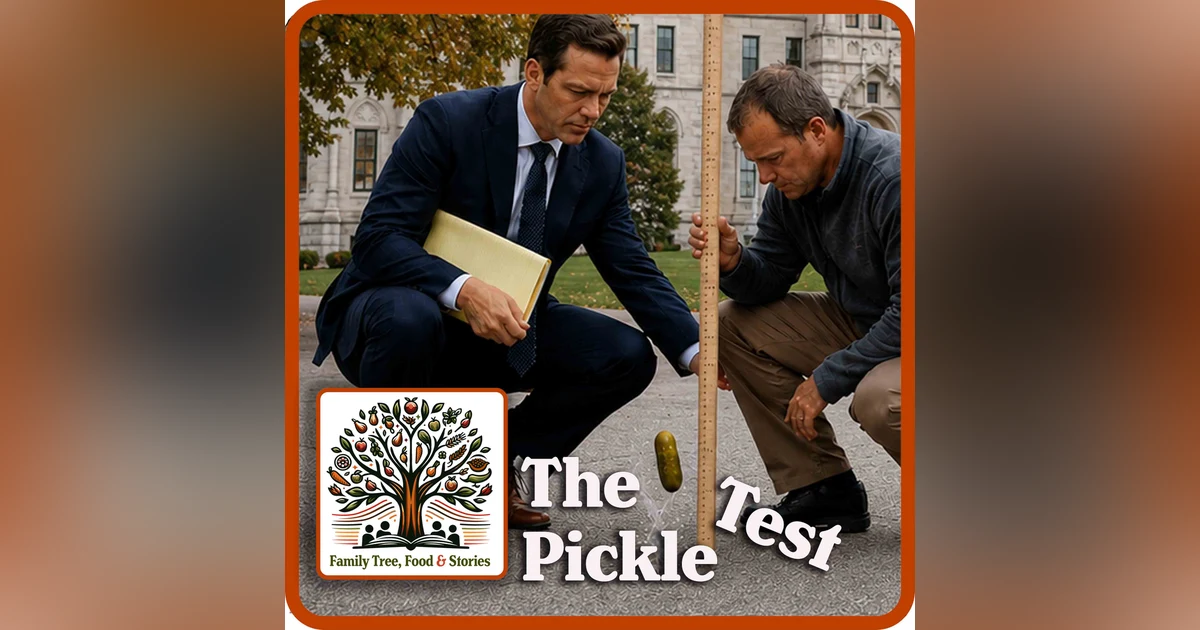
Is there really a Connecticut law that pickles have to bounce?
This one has been shared tons of times, and no, it's not. No Connecticut statute requires pickles to bounce, even though it's been posted on a "weird state law" list for more than 75 years. This posting traces back to a Hartford Courant headline from May 1948 about the so-called arrest of two pickle packers, who were said to be selling spoiled pickles. To resolve the issue, Connecticut's food and drug commissioner mentioned a bounce test to reporters as a freshness check, likely as a snarky joke and not a legal standard. The press ran with it and reported the test as "law." That fib has been retold time and again ever since. Both the Connecticut State Library and the state's Department of Consumer Protection have confirmed that no such law exists in their books.
How old is pickle history, really?
Some say the pickle is over 4,000 years old. That it was first noted as "created" in 2400 BC, Mesopotamia, Cleopatra's beauty routine, Caesar's troops, and WWII rations can be traced back to an 1893 promotional copy published by Pickle Packers International. That copy has been republished across food blogs and trivia sites for more than 130 years without any real historical verification, and it's still the first result many search engines post today.
Does pickle juice actually help with leg cramps?
Yes, this claim holds up. It comes down to electrolytes, and it's why athletes use it, including a widely referenced case of a football team crediting pickle juice during a game played in 109-degree heat.
If you've ever repeated a "fun fact" about pickles at a dinner party, or shared a listicle of "weird state laws," you might want to tune in for the rest of the stories in this next episode of Famdily Tree Food Stories about pickles!
Key Takeaways
- Is the 4,000-year pickle history real? Not really... a marketing group made it up to promote pickles in 1893.
- Does Connecticut have a bouncing pickle law? Ahat's a folklaw too... It's a 1948 headline, not a statute. But the headline is still posted on the Connecticut state website.
- Why do false food claims outrank the truth in search results? Once a claim gets republished enough times by "authoritative-sounding" sources, search engines and readers everywhere stop looking for verification. It becomes background knowledge. That's exactly how both pickle myths climbed to the top of search results and stayed there for decades.
- Does pickle juice really help leg cramps? Yes, and here's the science. It comes down to electrolytes. Athletes at every level use it, including a widely cited case of a football team crediting pickle juice for performance during a game played in 109-degree heat.
- What actually keeps a pickle firm? Pectin, not a bounce test.
What to do next:
Don't fall for a fake food fact again; instead, listen to and follow Family Tree Food & Stories at podcast.familytreefoodstories.com so the next myth-busting episode lands in your feed automatically. You'll have the best stories for your next dinner with friends too.
Know someone who still forwards those "weird state laws" listicles? Send them this episode; it's the fastest way to win that argument at Thanksgiving.
Leave a rating and review on Apple Podcasts or Spotify. It's the single biggest thing that helps new listeners discover the show, and it takes less time than debunking a pickle law.
Got a family food myth you've never actually fact-checked? Tell us about it; you might be the next episode.
Additional Links Shared:❤️
- Book: My Family Tree, Food & Stories Journal Awarded #1 New Release on Amazon
- Instagram Story updates 📸
- Facebook Family Tree Food Stories GROUP👍
- TikTok: Family Tree Food Stories
- 👇Share Your Story With Nancy & Sylvia!: Leave us a voicemail
- You can send us a DM on Facebook.
Next Thursday: we're uncovering the history and mysteries of rolling pins.
About Your Award-Winning Hosts:
Nancy May and Sylvia France are the powerhouse team behind Family Tree, Food & Stories, a member of The Food Stories Media Network, which celebrates the rich traditions and connections everyone has around food, friends, and family meals. Nancy, an award-winning business leader, author, and podcaster, and Sylvia, a visionary author, foodie, and business leader, combine their expertise to bring captivating stories rooted in history, heritage, and food. Together, they weave stories that blend history, tradition, and the love of food, where generations connect and share intriguing mealtime stories and kitchen foibles.
If you missed the first time around... now's your time to listen to Family Tree Food & Stories and get inspired to make better use of what’s already in your kitchen. Then visit our page to share how you're using your leftovers this year. Waste less. Cook smarter. Tell the story behind your fridge.
"Every Meal Has a Story, and Every Story is a Feast." (tm) is a trademark of the Family Tree Food & Stories podcast (c) copyright 2026, all US and International Rights Reserved.
@familytreefoodstories, #familytreefoodstories #familyfoodstories #pickles #sourpickles #garlicpickles #picklerecipes #picklestories #breadandbutterpickles #homemadepickles #pickledfoods #healthypickles #321picklerule #pickledeggs #pickledbeets #whatisapicklemadeof #bestpickles